Quick answer: Your pattern already holds the border count. Divide the stitches per 4 inches by the rows per 4 inches. Across 12 blanket patterns with a printed gauge, that gives a median of 1.6 single crochet per double crochet row end, not the 2 you are usually told, and 1.25 on textured stitches rather than 1. Two into every double crochet row end adds about a quarter more stitches than the edge can hold, and that surplus is the ruffle.
A blanket border ruffles for one reason: you put more stitches along the edge than the edge is long. Your corners can be perfect and your yarn can be right, and it will still wave.
Below are ten crochet blanket borders, each worked out from a real gauge. For every one you get the count per row end and the repeat to hold in your head.
Border stitches per row end = stitches per 4 inches divided by rows per 4 inches. A gauge of 13 stitches and 8 rows gives 1.63, not 2.
I use the same sums on every blanket I finish. To see the numbers on a full pattern, open the Koala Lovey Crochet Pattern and read its gauge line.
What you need before you start
- The gauge line from your pattern. It reads like 13 stitches and 8 rows in 4 inches. No gauge line means you swatch.
- A hook one size down for the border. Many people work borders tighter than the blanket, so check how yours behaves.
- A flat table. You will lay the blanket down after the first side and look at it.
- Stitch markers for the corners. Mark each corner once and you will not lose count.
- A calculator or a pencil. One division is all the maths there is.
Nobody can give you one count that fits every blanket, because the count depends on how tall your rows are against how wide your stitches are. That is why my crochet stitches for blankets guide lists the width of each stitch, and why the Solid Granny Square Crochet Pattern is a good file to practise the division on.
1. Double crochet and chain shells: two into every row end
A gauge of 12 stitches and 6 rows gives 2.00. This is the one fabric where the folk rule is right.
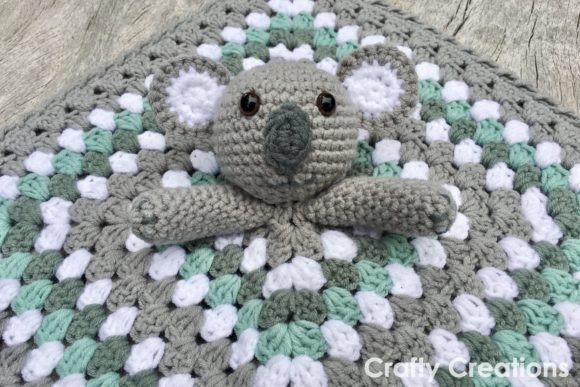
Shells are tall and airy, so each row end has room for two stitches. You can work the border straight through without a repeat. A written pattern to check your sums against is the Koala Lovey Crochet Pattern.
2. Double crochet in worsted: a 2, 2, 1 repeat
A gauge of 13 stitches and 8 rows gives 1.63. Work 2, 2, 1 into consecutive row ends and repeat.
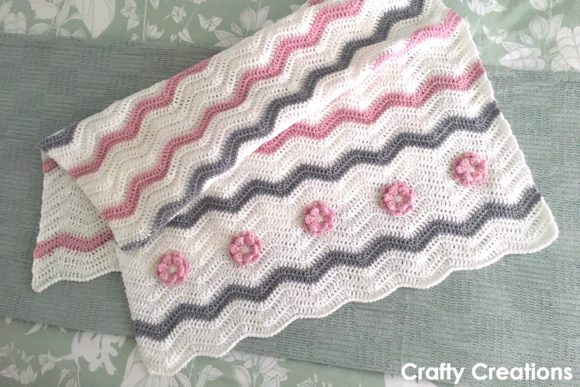
This is the plain blanket most of us make first. If you put 2 in every row end here, you add about a quarter too many stitches and the edge waves. A written pattern to check your sums against is the Floral Ripple Blanket.
3. Super bulky double crochet: 8 stitches in 5 row ends
A gauge of 8 stitches and 5 rows gives 1.60. Over five row ends you place eight stitches.
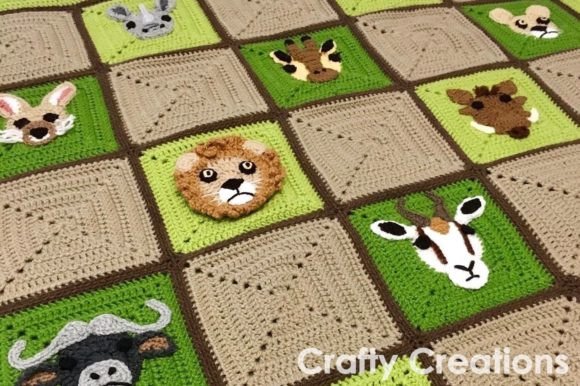
Fat yarn makes tall stitches, so the count looks high but is still short of 2. Work 2, 2, 1, 2, 1 and lay it flat. A written pattern to check your sums against is the South African Safari Blanket.
4. Double crochet with single crochet rows: 7 in 5
A gauge of 14 stitches and 10 rows gives 1.40. That is seven stitches over five row ends.
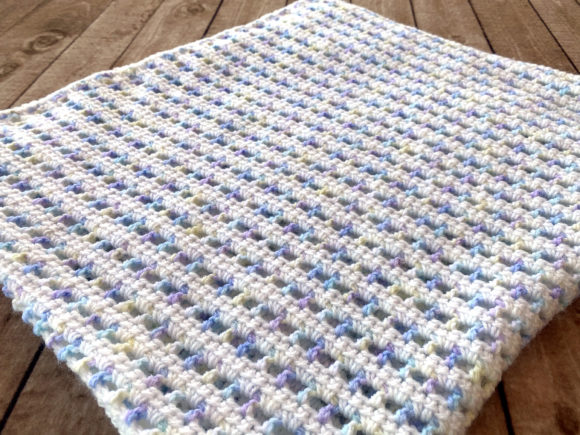
Alternating row heights make the edge uneven by nature. A repeat of 2, 1, 2, 1, 1 spreads the surplus so you do not bunch it. A written pattern to check your sums against is the Sherbet Baby Blanket Crochet Pattern.
5. Crossed double crochet: a 2, 1, 1 repeat
A gauge of 16 stitches and 12 rows gives 1.33. Work 2, 1, 1 and repeat.
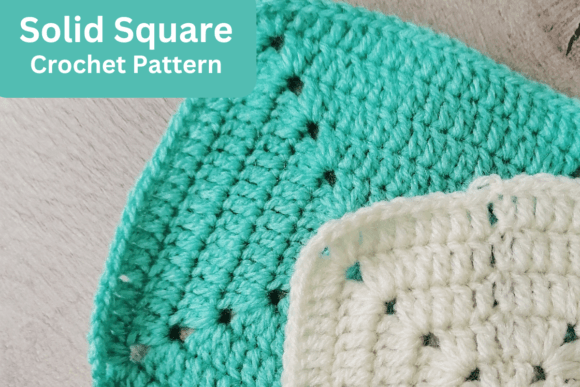
Crossed stitches pull the fabric together, so your rows are shorter than you expect. You need fewer border stitches, not more. A written pattern to check your sums against is the Solid Granny Square Crochet Pattern.
6. Single crochet with a half double cable: 4 in 3
A gauge of 15 stitches and 11 rows gives 1.36, close to four stitches over three row ends.
Cable stitches shorten the edge as well. Work 2, 1, 1 and check the side against the table before you carry on. A written pattern to check your sums against is the Koala Lovey Crochet Pattern.
7. Moss stitch: a 2, 1, 1, 1 repeat
A gauge of 20 stitches and 16 rows gives 1.25. That is five stitches over four row ends.
Textured stitches are nearly as tall as they are wide. The old rule of one per row end leaves the border pulling in, so this repeat adds just enough. A written pattern to check your sums against is the Floral Ripple Blanket.
8. Single crochet worked with yarn held double: 5 in 4
A gauge of 15 stitches and 12 rows also gives 1.25, so the same 2, 1, 1, 1 repeat holds.
Holding two strands makes a dense, short fabric. You will find the border wants the same count as moss stitch even though the stitches look nothing alike. A written pattern to check your sums against is the South African Safari Blanket.
9. Double crochet decreases: one extra in 8
A gauge of 9 stitches and 8 rows gives 1.13. You work one stitch in each row end and add an extra one about every eighth.
Shaped blankets have short, wide rows. This is the fabric where two per row end gives you the biggest ruffle, and where the first side test matters most. A written pattern to check your sums against is the Sherbet Baby Blanket Crochet Pattern.
10. Plain single crochet: skip one in 15
A gauge of 14 stitches and 15 rows gives 0.93. You skip a row end now and then instead of adding stitches.
Single crochet rows are shorter than the stitches are wide. Working one per row end puts in slightly too many, so you skip one about every fifteenth. A written pattern to check your sums against is the Solid Granny Square Crochet Pattern.
How to find your own border count
Think about what a border stitch has to do. It sits at a row end and has to be as tall as one row is deep. So the question is how many single crochet widths fit into one row height.
Both numbers are in your gauge line. Divide them and you have the count, whatever the stitch.
- Over 1.6 means close to two per row end, as in shells.
- Between 1.33 and 1.6 means a repeat such as 2, 2, 1 or 2, 1, 1.
- Near 1.25 means 2, 1, 1, 1 on textured stitches.
- Under 1 means you skip a row end now and then.
| Fabric | Gauge (stitches x rows) | Per row end |
|---|---|---|
| Double crochet and chain shells | 12 x 6 | 2.00 |
| Double crochet | 13 x 8 | 1.63 |
| Super bulky double crochet | 8 x 5 | 1.60 |
| Double crochet and single crochet rows | 14 x 10 | 1.40 |
| Crossed double crochet | 16 x 12 | 1.33 |
| Single crochet with half double cable | 15 x 11 | 1.36 |
| Moss stitch | 20 x 16 | 1.25 |
| Single crochet, yarn held double | 15 x 12 | 1.25 |
| Double crochet decreases | 9 x 8 | 1.13 |
| Plain single crochet | 14 x 15 | 0.93 |
- Read the right column to see what each row end takes.
- Read the middle column and match it to your own gauge line.
- Anything under 2 means the folk rule gives you a ruffle.
One free pattern in my sample tells you in its text to work two single crochet around every double crochet. Its own border has 136 stitches along a 34 inch side, which is 1.33 per row end. The prose repeats the rule; the real count, reached by making the thing, does not.
That is about 50 percent more stitches than the edge can take, and it is why I trust the gauge over the sentence. For a file to test this on, try the South African Safari Blanket.
Before step one, a small file helps you rehearse: the Sherbet Baby Blanket Crochet Pattern has a short gauge line to divide.
Seven steps from gauge line to a flat border
Step 1: Find the gauge line
It reads something like 13 stitches and 8 rows in 4 inches. If your pattern has none, swatch in the blanket stitch and count both numbers yourself.
Step 2: Divide stitches by rows
13 divided by 8 is 1.63. That is how many border stitches belong in each row end along the sides.
Step 3: Turn the decimal into a repeat
1.63 is near 5 in 3, so work 2, 2, 1. 1.33 is 4 in 3, so 2, 1, 1. A repeat is easier to hold than a decimal, and it spreads the surplus.
Step 4: Work the top and bottom edges
One border stitch goes into each existing stitch. These edges are simple because you are not turning a row end.
Step 5: Work the first long side and stop
Lay the blanket flat on a table without pulling it. Flat means carry on. Waving means take out that side and drop one stitch from the repeat.
Step 6: Give every corner three stitches
Three single crochet in the corner stitch turns the corner without pulling. A corner travels further than a straight edge, so more is right here.
Step 7: Keep the count the same on later rounds
Once round one is flat, every later round works one stitch into each stitch and three in each corner. Ruffles on round three come from extra stitches slipped into the corners.
Run these seven steps on a small blanket first, such as the Koala Lovey Crochet Pattern, and you will know your own repeat before you commit to a large one. Write the repeat on a sticky note and keep it on the blanket, because you will forget it halfway down the second side. The note costs nothing and it saves you a round. If you work with a friend or in a group, share the repeat with them as well, because the same gauge gives the same count.
If it goes wrong: four ways a border fails
- It ruffles. You have too many stitches. Take out the round and redo it with a repeat. About 25 percent too many will not block out and comes back after the first wash.
- It pulls the blanket in. You have too few, or you work the border tighter than the blanket. Go up a hook size and check the count.
- The corners cup. Two stitches in a corner is too tight. Use three, and five only on taller border stitches.
- The linen stitch gives nonsense. One pattern gave 0.60 because its gauge counts pairs, not single stitches. Convert to real stitches before you divide. See the stitch width guide.
Each is cheaper to prevent than to fix. If the edge waves before any border goes on, the stitch count drifted earlier, and the beginner blanket guide covers keeping the sides straight. A small file to try again on is the Sherbet Baby Blanket Crochet Pattern.

Questions people ask about blanket borders
How many single crochet do I put in each row end?
Divide stitches per 4 inches by rows per 4 inches. For most worsted double crochet blankets that lands near 1.6, so use a repeat of 2, 2, 1 rather than 2 in every row end.
How do I add a border to a crochet blanket?
Work the top and bottom edges one stitch per stitch, then the sides by your gauge division, and put three stitches in each corner. Stop after the first long side and lay it flat.
How do I prepare a crochet blanket for a border?
Weave in every end, then lay the blanket flat and measure the sides. Do not block it before the border, because the row ends move once it relaxes.
What is the best crochet blanket border?
A plain single crochet round is the best start because it is the easiest to get flat. Add a decorative edge on the next round once the count is right.
What is the simplest border on a blanket for beginners?
Single crochet all round with three in each corner. A beginner who works the count from the gauge line will get a flat edge on the first try.
How do I start a border on a crochet blanket?
Join your yarn in any corner stitch, chain one, and work three single crochet there. Then follow your repeat down the first side.
Is there a best crochet edging for a baby blanket?
A plain single crochet round with a small shell on top is the common choice. It stays soft against skin and still follows your count. For a baby pattern, see the Sherbet Baby Blanket Crochet Pattern.
Why is my crochet blanket border ruffling?
You have too many stitches along the edge. The usual cause is the two per double crochet rule on a fabric whose gauge asks for about 1.6.
Can I fix a ruffled border without undoing it?
Only if it is mild, and only with blocking. A border with 25 percent too many will not block out. Take out the round and redo it.
Do I need a border at all?
No. A blanket with clean, even sides is finished as it is, and a border you have not worked out the count for makes it worse.
Key takeaways
- Border stitches per row end equal stitches per 4 inches divided by rows per 4 inches.
- The median is 1.6 on double crochet and 1.25 on textured stitches, not 2 and 1.
- Turn the decimal into a repeat such as 2, 2, 1 or 2, 1, 1, 1.
- Work one long side and lay it flat before you go on.
- For a file to practise on, try the Koala Lovey Crochet Pattern.