Quick answer: The stitch you pick sets the width of your blanket before you crochet a single row. For a 130 cm throw in worsted yarn, a granny cluster needs 147 chains and double crochet needs 205. That is a 39 percent gap from the same yarn. Choose the stitch, then count the chains.
You search crochet stitches for blankets and get a wall of pretty swatches. None of them tells you how many chains to start with. I learned that the hard way with a shell blanket that came out a hand wider than the half double crochet one I had made the week before, with the same hook and the same yarn.
So 16 free blanket patterns, all in worsted yarn, went through the same sum. Below are ten stitch families, sorted from the tightest to the widest, like a stitch sampler, so you can pick the look you like and know the chain count that goes with it.
Same yarn, same hook, same 130 cm throw: 147 chains for a granny cluster, 205 for double crochet. A blanket is a stitch choice first and a chain count second.
Every number here is stitches per inch, worked out from the starting chain divided by the finished width. Before you cast on, check these three things:
- Yarn: worsted weight, and the hook the label recommends.
- Width: a 130 cm throw is 51 inches across.
- Swatch: 6 inches wide, measured in the middle, with 1 inch of tolerance.
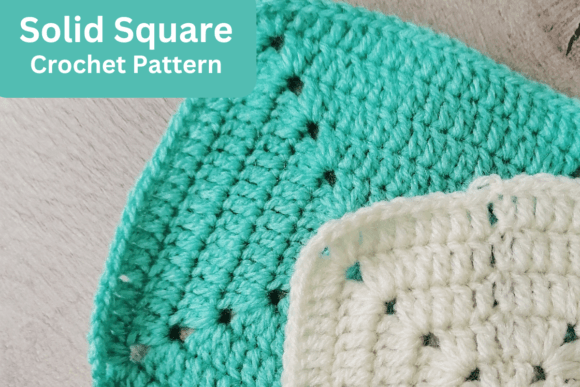
You do not have to buy a pattern for any of the first three stitches, and you can start with a basic one. When you want a written file with the chain count done for you, Solid Granny Square Crochet Pattern is a clean one to follow.
What you need before you choose a stitch
- One worsted yarn, the same in every swatch. Change the yarn and you change the width, so you learn nothing.
- The hook size from the label. It is the fair starting point for a blanket that drapes.
- A tape measure in inches. Stitches per inch is the only number that carries across patterns.
- A pencil and a card. Write the count on it as you go.
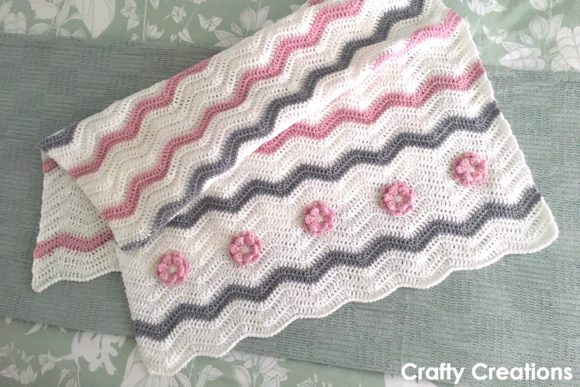
For the sizes themselves, my crochet blanket size chart gives the finished width of each blanket, and Floral Ripple Blanket shows how a pattern file sets out its chain count.
1. Granny cluster: 2.87 stitches per inch, 147 chains
The granny cluster is the widest-spaced stitch in the set, at 2.87 stitches per inch. For a 130 cm throw that is 147 chains, the shortest start of all.
Clusters pull the stitches up into puffs, so each one covers more width than a flat stitch. You need fewer chains and the fabric is warm and thick. It suits a chunky throw. You can compare it with Solid Granny Square Crochet Pattern. You will know within a row whether you like how it feels.
2. Crossed double crochet, lemon peel and alpine: 3.00, 154 chains
Three stitches landed on exactly 3.00 stitches per inch: crossed double crochet, lemon peel and alpine. For a 130 cm throw, each starts at 154 chains.
They look nothing alike, but they take the same width. That is useful: swap one for another and the chain count does not change. All three are easy once the first row is done. You can compare it with Floral Ripple Blanket. You get a clearer idea of the width from a swatch than from any photo.
3. Shell stitch: 3.07 to 3.75 per inch
Shell stitch was the least predictable. One pattern measured 3.07 stitches per inch and needs 157 chains. Another measured 3.75 and needs 192.
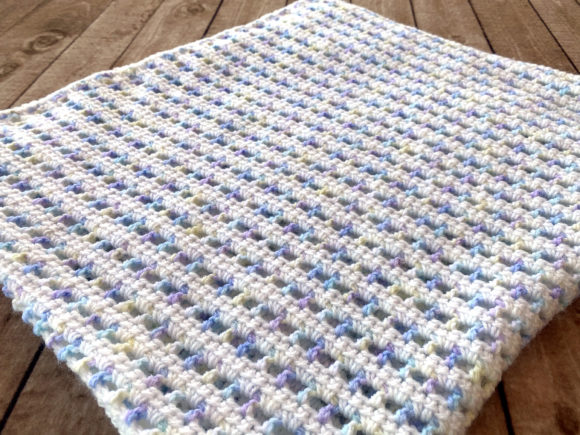
That is 35 chains of difference for the same stitch name, from the number of double crochets in each shell. A shell of five spreads, and a shell of three packs closer. Count your own shell before you trust a pattern. You can compare it with Sherbet Baby Blanket Crochet Pattern. You will know within a row whether you like how it feels.
4. Half double crochet and bobble: 3.17, 162 chains
Half double crochet and bobble both measured 3.17 stitches per inch. For a 130 cm throw, that is 162 chains.
Half double crochet is the plain choice, quick and soft, with a little ridge. The bobble is the same width but takes far longer. If you are making a first blanket, take the plain one. You can compare it with Solid Granny Square Crochet Pattern. You get a clearer idea of the width from a swatch than from any photo.
5. Moss with decreases: 3.23, 165 chains
Moss stitch with a double crochet decrease measured 3.23 stitches per inch. For a 130 cm throw you start with 165 chains.
The decreases pull the rows in a little and give a dense, woven look. You will find it in many beginner blanket patterns, and it lies flat without blocking. You can compare it with Floral Ripple Blanket. You will know within a row whether you like how it feels.
6. Waffle stitch: 3.33 to 3.75 per inch
Waffle stitch gave me two numbers. One pattern measured 3.33 stitches per inch and needs 170 chains. The other measured 3.75 and needs 192.
That is a 22 chain gap. The deep, post-stitch waffle is the narrower one, because the ridges draw the fabric together. It makes a thick baby blanket, and it is worth a swatch. You can compare it with Sherbet Baby Blanket Crochet Pattern. You get a clearer idea of the width from a swatch than from any photo.
7. Mixed height diamonds: 3.43, 176 chains
A diamond pattern that mixes stitch heights measured 3.43 stitches per inch. For a 130 cm throw, that is 176 chains.
Taller and shorter stitches pull against each other, and that is what draws the diamond. The pattern is more forgiving than it looks, because you read the shape from the row before. You can compare it with Solid Granny Square Crochet Pattern. You will know within a row whether you like how it feels.
8. Crossover treble: 3.63, 186 chains

The crossover treble measured 3.63 stitches per inch, so a 130 cm throw starts at 186 chains.
Tall stitches cross over each other and stand in a lattice. It is a showy stitch for a gift. It also drapes better than the denser ones, because the stitches have room to move. You can compare it with Floral Ripple Blanket. You get a clearer idea of the width from a swatch than from any photo.
9. Moss and reverse blanket stitch: 3.67, 188 chains
Two stitches measured 3.67 stitches per inch: plain moss and the reverse blanket stitch. For a 130 cm throw, each needs 188 chains.
Moss is the classic (my crochet moss stitch blanket guide has the rows), a single crochet and a chain repeated. The reverse blanket stitch is flatter and neater. Both are easy for a beginner, and both lie flat from the first row. You can compare it with Sherbet Baby Blanket Crochet Pattern. You will know within a row whether you like how it feels.
10. Double crochet: 4.00, 205 chains
Double crochet measured 4.00 stitches per inch, the tightest in the set. For a 130 cm throw you need 205 chains.
It is the stitch behind most free blanket patterns for beginners, and the fastest way to cover a lap. You trade width for speed, because every inch costs you more chains than any other stitch here. You can compare it with Solid Granny Square Crochet Pattern. You get a clearer idea of the width from a swatch than from any photo.
You will pick up more from the neighbouring guides: crochet blanket borders for the edge, crochet waffle stitch blanket for the thick one, and crochet patterns for baby blankets for a gift. You can read any of them in a few minutes, and you will see where each stitch fits.
You are the only one who knows your tension. You can use the table to choose, but you should trust your own swatch. You will thank yourself when the blanket comes out the width you wanted, and you will not have to rip back. The same swatch trick works for a crochet throw blanket and for a crochet cushion cover.
Swapping the stitch without losing the width
You can put a new stitch into an old pattern. You only need to redo one sum. Here is how I work it out:
- Step 1: find the stitches per inch of the stitch in the pattern.
- Step 2: find the number for the stitch you want, from the table below.
- Step 3: multiply the new number by the width in inches, and chain that many, plus the turning chains.
- Step 4: work a 6 inch swatch and check it before you commit.
For a width of 30 inches, the chain count at 2.87 stitches per inch is 86. At 3.67 it is 110, and at 4.00 it is 120. You can see how fast the numbers move. A pattern file to practise the sum on is Floral Ripple Blanket.
You will also notice the repeat. Shell, moss and waffle need chains in multiples, so round your count to the nearest repeat. You lose a little width, but the pattern comes out in whole units.
All sixteen patterns in one table
This is the full set at one yarn weight. It is the quickest way to see where your favourite stitch lands.
| Stitch | Stitches per inch | Chains for a 130 cm throw |
|---|---|---|
| Granny cluster | 2.87 | 147 |
| Crossed double crochet | 3.00 | 154 |
| Lemon peel | 3.00 | 154 |
| Alpine | 3.00 | 154 |
| Shell | 3.07 | 157 |
| Half double crochet | 3.17 | 162 |
| Bobble | 3.17 | 162 |
| Moss with decreases | 3.23 | 165 |
| Waffle | 3.33 | 170 |
| Mixed height diamonds | 3.43 | 176 |
| Crossover treble | 3.63 | 186 |
| Moss | 3.67 | 188 |
| Reverse blanket stitch | 3.67 | 188 |
| Waffle, deep | 3.75 | 192 |
| Shell, five-stitch | 3.75 | 192 |
| Double crochet | 4.00 | 205 |
- Up to 3.2 stitches per inch: seven patterns, the wide and warm ones.
- From 3.2 to 3.5: three patterns, the middle road.
- 3.5 and above: six patterns, the tight and quick ones.
The whole spread, 2.87 to 4.00, is 147 chains against 205, a difference of 58 chains or 39 percent. To see how a designer lays out a blanket pattern, Sherbet Baby Blanket Crochet Pattern is an easy file to read.
Six steps to a chain count that fits
Step 1: Pick the stitch
Choose it for the look and the feel, not for the label on the pattern.
Step 2: Chain 20 and work the first row
This is a short test strip, long enough to show a repeat.
Step 3: Work six rows
The pattern needs to settle before it tells you the truth.
Step 4: Measure the width in the middle
Lay it flat and do not stretch it. Use the middle, not the edge.
Step 5: Divide the chains by the inches
That gives your own stitches per inch, which beats any table.
Step 6: Multiply by the width you want
For a 130 cm throw, multiply by 51 and round to the nearest repeat.
This is how to start a crochet blanket step by step, and it takes about twenty minutes. For the stitches with pictures, Solid Granny Square Crochet Pattern lays out each row.
If it goes wrong
- The blanket is narrower than planned. Your tension is tighter than the pattern. Go up a hook size and restart with the same chains.
- The blanket is wider than planned. You loosened up, or the stitch spreads. Pull back to the swatch and count again.
- The edges wave. You added or lost stitches at the turn. Count the row end every time.
- The fabric is stiff. Your hook is too small for the stitch. Try one size up, or choose Floral Ripple Blanket for a softer stitch.
Each is cheaper to prevent than to fix. A file you can practise on first is Sherbet Baby Blanket Crochet Pattern.
Questions people ask about crochet stitches for blankets
What are the best crochet stitches for blankets, and which are easy for beginners?
Double crochet and moss are the easiest, at 4.00 and 3.67 stitches per inch. Half double crochet is the softest of the plain ones. A file to follow is Solid Granny Square Crochet Pattern.
What is the easiest crochet blanket stitch pattern, free?
Moss stitch. It is one single crochet and one chain repeated, it lies flat, and it needs 188 chains for a 130 cm throw.
What crochet stitch makes a chunky, thick blanket?
The granny cluster and waffle stitch. They are the thickest in the set, and the granny cluster needs only 147 chains.
How many chains do I need for a crochet blanket?
It depends on the stitch. For a 130 cm throw in worsted yarn, between 147 and 205. Multiply your own stitches per inch by the width in inches.
What is the best stitch for a baby blanket?
Waffle or moss. Both are dense and soft, and neither has holes that small fingers can catch in. A pattern to compare against is Floral Ripple Blanket.
Which stitch uses the least yarn?
The tallest stitches use less yarn per inch of fabric, but they are looser. Double crochet is quick, and the granny cluster gives the warmest result for the chains.
Can I change the stitch in a pattern I already have?
Yes. Swap the stitches per inch, redo the chain sum and work a 6 inch swatch first. The section above has the four steps.
Why does my shell stitch blanket come out wider than the pattern?
Shells vary a lot. one pattern sits at 3.07 and another at 3.75. You should count the stitches in your own shell. A small file to practise on is Sherbet Baby Blanket Crochet Pattern.
Key takeaways
- The stitch sets the width: 147 chains for a granny cluster, 205 for double crochet.
- Three stitches share 3.00 stitches per inch, so they swap freely.
- Shell and waffle vary, so swatch your own.
- Multiply stitches per inch by the width in inches.
- For a file to start from, try Solid Granny Square Crochet Pattern.