Quick answer. Divide the size you want in cm by the width of one square. A 130 by 150 cm C2C blanket is 52 by 60 squares at a 2.5 cm square, 65 by 75 at 2 cm and 43 by 50 at 3 cm. The chart below gives five sizes in all three.
You search for a C2C blanket size chart and find a table in inches, a calculator that wants a number you do not have, and a chat answer that disagrees with both.
The disagreement is real. Asked the same question on the same day, two AI answers gave 70 by 80 squares and 50 by 60 squares for the same 52 by 60 inch throw. That is 5600 squares against 3000, a difference of 1.87 times, and neither said how wide a square was.
A written file such as Sundae Snuggle prints the square it was made with, which is the number the chats left out. The square you measure comes from the stitch, and how to crochet corner to corner shows which part of the block to measure.
Squares across = width in cm / width of one square. Squares down = length in cm / width of one square.
This guide gives the chart in centimetres, shows where the other charts get their numbers, and shows how to check the size before you are 100 rows in. For the row count of a chart, the C2C chart row count guide covers it.
C2C crochet blanket size chart: squares across, squares down and centimetres
Each cell gives you the squares across by the squares down, then the rows. The 2.5 cm column is the middle one: a worsted weight yarn on a medium hook usually lands there.
| Finished size | 2 cm square | 2.5 cm square | 3 cm square |
|---|---|---|---|
| 30 by 30 cm (lovey) | 15 by 15, 29 rows | 12 by 12, 23 rows | 10 by 10, 19 rows |
| 75 by 90 cm (pram) | 38 by 45, 82 rows | 30 by 36, 65 rows | 25 by 30, 54 rows |
| 100 by 130 cm (lap) | 50 by 65, 114 rows | 40 by 52, 91 rows | 33 by 43, 75 rows |
| 130 by 150 cm (throw) | 65 by 75, 139 rows | 52 by 60, 111 rows | 43 by 50, 92 rows |
| 170 by 230 cm (twin bed) | 85 by 115, 199 rows | 68 by 92, 159 rows | 57 by 77, 133 rows |
Read across a row and you see one blanket in three yarns. The throw is 92 rows in a chunky yarn and 139 in a fine one, and the lap blanket at a 3 cm square comes out 99 cm wide, not 100, because 33 whole squares cannot be split.
Whole squares are the reason every number in the chart is rounded. A blanket is never exactly 130 cm wide, it is 52 squares wide, and the width is whatever 52 squares come to in your yarn.
The chart tells you which count lands nearest to the size you wanted.
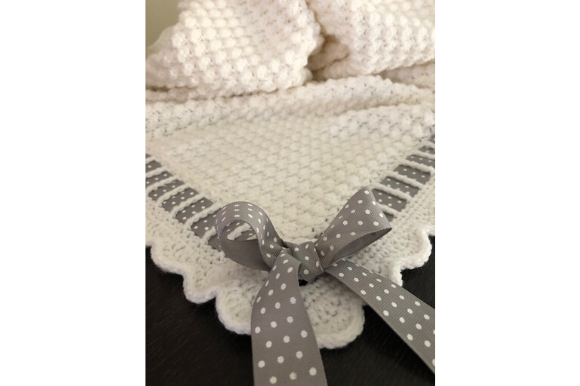
A pattern file that prints its own sizes saves you the table. Sundae Snuggle includes a size chart of 5 sizes, from a receiving blanket up to a king.
How many squares is a C2C blanket?
Multiply the squares across by the squares down. A throw of 52 by 60 squares is 3120 squares in all, and each one is a chain of three, three double crochet and a turn.
Total squares is the number that tells you how much yarn and how many evenings. Rows is the number that tells you where you are in the chart.
They are not the same thing. The throw above is 3120 squares but only 111 rows, because each row is a diagonal of up to 52 squares.
- Squares across sets the width of the blanket.
- Squares down sets the length.
- Rows is across plus down, minus 1.
- Total squares is across times down, and it drives the yarn.
The same 130 by 150 cm throw is 2150 squares at 3 cm and 4875 at 2 cm. A finer yarn is not a little more work, it is more than twice the work.
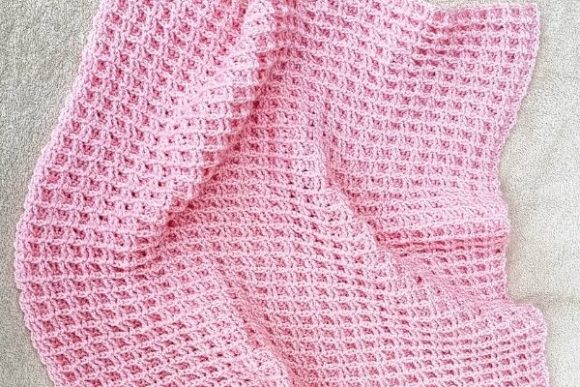
A baby pattern like Double Waffle states its total size, so you can test the sum against a real file.
Why two C2C size charts give 3000 and 5600 squares for the same blanket
They count a different square. One answer uses a square of 0.75 inch, which is 1.9 cm, and gets 70 by 80 squares for a 52 by 60 inch throw. The other uses 1 inch, 2.5 cm, and gets 50 by 60.
Both are fair for some yarn. A 0.75 inch square is a fine worsted on a small hook. A 1 inch square is a plain worsted on a medium hook.
A chart that does not name its square is only right if your square happens to be the same.
This is the reason you see three columns in the table above and not one. Pick the column nearest your own square, and if none is near, the next section gives you the number.
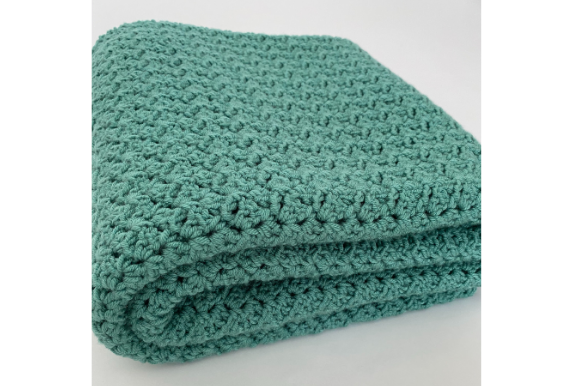
A paid file removes the guess: it names the yarn and hook it was made with. The Jaske throw is written for a medium weight yarn, so you know what its numbers belong to.
Find the width of your own square: a 5 by 5 swatch in centimetres
The charts need one number from you. You make a swatch of 5 squares by 5 squares in the yarn and hook you plan to use.
- You lay the swatch flat without pulling it.
- You measure the width in the middle, in centimetres.
- Divide by 5. A swatch of 12.5 cm gives a 2.5 cm square.
- Divide the size you want by that number.
For a blanket 130 cm wide and a 2.5 cm square, that is 52 squares across. A swatch of 10 squares is better again: the same reading error of 1 cm is spread over twice as many squares, so it costs half as much.
The guide to squares across for the width you want shows what a misreading costs.
Make the swatch in the stitch you will use. Double crochet gives a different square from half double crochet, and the next yarn weight up changes it again. The crochet stitches for blankets guide shows how wide each common stitch runs.
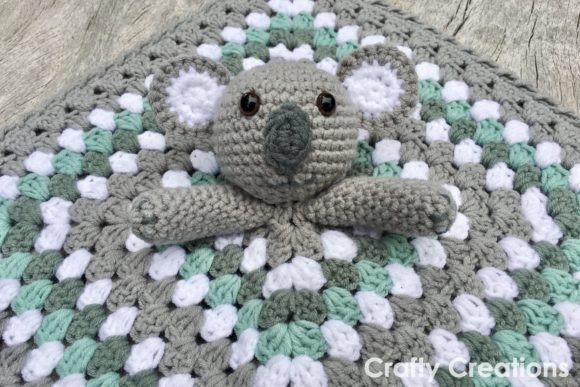
My own rule is a swatch of 10, not 5, because one misread centimetre then moves the answer half as far. A small lovey such as the Koala Lovey makes a swatch that is also a finished piece.
A worked example: a 130 by 150 cm throw from a 12.5 cm swatch
Take the swatch from the section above. Five squares measure 12.5 cm across, so one square is 2.5 cm. The throw is 130 cm wide and 150 cm long.
- Squares across: 130 / 2.5 = 52.
- Squares down: 150 / 2.5 = 60.
- Rows: 52 + 60 – 1 = 111.
- Total squares: 52 x 60 = 3120.
Now the same blanket in a yarn that gives a 2 cm square. It is 65 across and 75 down, 139 rows and 4875 squares. The width and the length are identical, and the work is 56 per cent bigger.
That is why the square width goes first in every sum. Choosing the yarn is choosing the work, and the chart only shows the bill.
I would still wash the swatch before trusting the 2.5, and you can compare the result with a second set of numbers from a file like Mikeisha’s Baby Blanket.
Standard blanket sizes in centimetres, from lovey to full bed
There is no official size, but you will see the same ones turn up. The usual inch sizes converted to centimetres are below, with the squares across at a 2.5 cm square.
| Blanket | Inches | Centimetres | Squares across, 2.5 cm |
|---|---|---|---|
| Lovey | 12 by 12 | 30 by 30 | 12 |
| Pram | 30 by 36 | 76 by 91 | 30 |
| Lap | 40 by 50 | 102 by 127 | 41 |
| Throw | 50 by 60 | 127 by 152 | 51 |
| Twin bed | 66 by 90 | 168 by 229 | 67 |
| Full bed | 80 by 90 | 203 by 229 | 81 |
For a bed, the length falls over the edge and the width is what you see, so people often make a blanket a little narrower than the mattress and a little longer. If the blanket is for a cot, the baby blanket patterns guide lists finished sizes that fit one.
To see a whole range printed in one file, the Bonnie baby blanket gives a size chart of 5 sizes.
From squares to centimetres: the check you run before the last row
The chart works forward, from centimetres to squares. The check works back. When the increase rows are done, lay the work flat and measure the long edge of the triangle.
The long edge of the triangle is the diagonal. It is not the width. The width of the blanket is the diagonal divided by 1.41, so a diagonal of 70 cm is a blanket about 50 cm wide.
The simpler way is for you to count. The number of squares in the last increase row is the squares across. Multiply by your square and you have the width in cm.
If it is 3 cm short, you have time to add a straight row or two before you start decreasing.
I put a marker in the last increase row so I can find it again. It is the cheapest tool in the whole project, and you will be glad of it when the count slips.
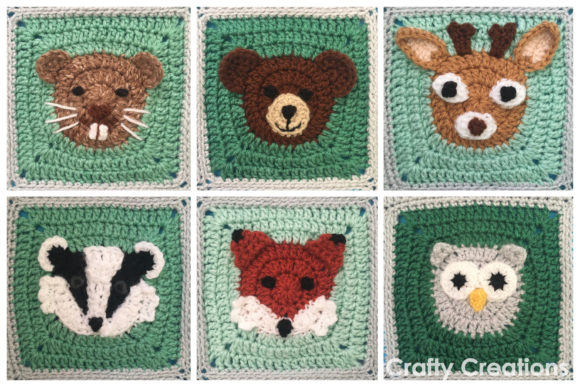
A pattern such as the Woodland Animal blanket shows where its own count changes.
The C2C blanket came out narrower and shorter than the chart
You will hear this complaint often, and it has three causes.
- The square is smaller than the chart assumed. A 2 cm square against a 2.5 cm column is 20 per cent short.
- The squares are wider than they are tall. A double crochet square is often a little wider than it is high, so across and down need two measurements, not one.
- The blanket was measured before it was relaxed. Fresh off the hook it is tight, and it opens after washing.
Measure the swatch both ways: the width across five squares and the height down five squares. Use the width for the squares across and the height for the squares down.
If the blanket is already narrow, add straight rows to the length or a border to the width. A border of 5 to 8 cm all round is the quickest way to bring a throw back to size without frogging a row.
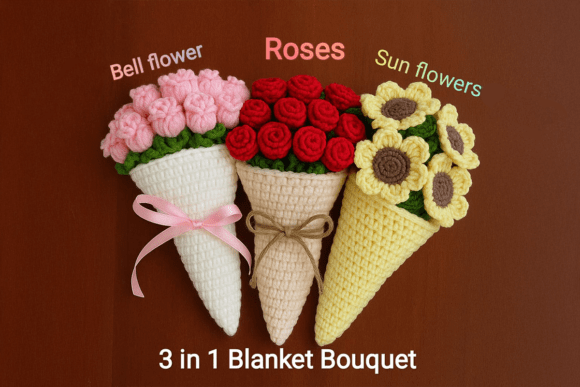
The crochet blanket border guide gives the stitch counts that stop the edge from ruffling. I would measure both ways before blaming the stitching, and a file such as Blanket Bouquet gives you a size to compare against.
Does washing or blocking change the size?
Yes, and you will see the direction depends on the fibre. You will find that cotton grows with a wash, and acrylic mostly stays. Wool relaxes and opens when it is blocked.
The fix is to wash the swatch the way the blanket will be washed, then measure. The number you want is the washed one.
If the swatch grows by 1 cm over 5 squares, that is 0.2 cm a square, and on 52 squares it is 10 cm of width.
For a gift, you should wash and measure before you decide on the squares across, not after. I would wash it first, because a gift that grows 10 cm is a worse surprise than a swatch that does.
For a blanket that will only be dry cleaned or spot cleaned, the unwashed swatch is the honest one.
Calculator, chart or a file with the sizes printed
A calculator is fast when you know your square. It gives one number for one input and no reason. A chart like the one above shows the neighbours, so you can see what a bigger or smaller square does to the blanket.
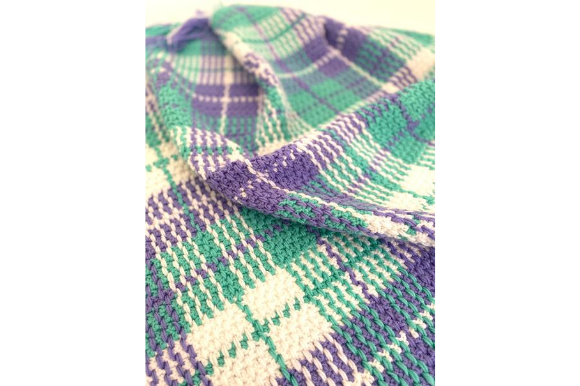
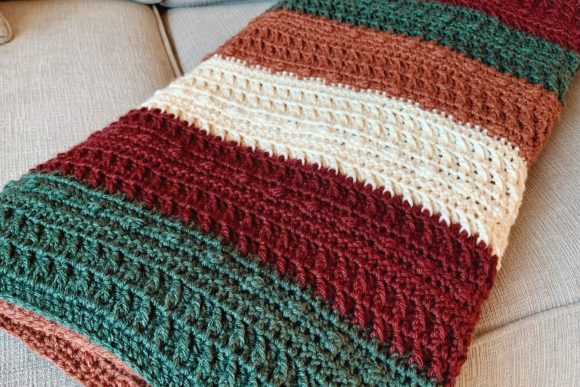
A file with the sizes printed fills in what both leave out: the yarn and hook the numbers belong to, the rows and where the shaping starts. French Countryside is an easy one to start from, and the Tartan blanket shows a more patterned design.
I use the calculator when the pattern is free and plain, and a file when the blanket is a gift and has to come out the size you said. For a first blanket, the crochet blanket for beginners guide covers the straight edges.

Questions about C2C blanket size and centimetres
How big will my C2C blanket be?
Squares across times the width of one square. 52 squares of 2.5 cm is 130 cm wide.
How many squares for a throw blanket?
A 130 by 150 cm throw is 52 by 60 squares at a 2.5 cm square, 65 by 75 at 2 cm and 43 by 50 at 3 cm.
How big is one C2C square?
Between 2 and 3 cm in most yarns on a medium hook. Measure a swatch of 5 by 5 and divide by 5.
What is the size of a crochet blanket?
A lovey is about 30 by 30 cm, a pram blanket 75 by 90, a lap blanket 100 by 130, a throw 130 by 150 and a twin bed 170 by 230.
How do I start a C2C crochet blanket?
Chain 6, work a double crochet into the 4th chain from the hook and the next two chains, then increase one square a row until you reach the squares across.
Do I need a paid pattern for the sizes?
A free pattern is enough when you do the sum yourself. A file that prints its sizes is easier for a gift, for instance Sundae Snuggle.