Quick answer: To crochet a throw blanket, size it in yards before you buy. A 50 by 60 inch throw takes about 2,780 yards in granny stitch and about 3,780 yards in mini bean stitch, so the stitch you pick changes the order by roughly 1,000 yards.
A throw blanket looks like one size, but the yarn you need depends on the stitch more than on the inches. Here are ten ways to crochet a throw blanket, each with its size, its yards and the chain you start with.
The numbers come from the spread between two stitches on worsted yarn, so treat them as a starting point. Your hands will move them, and a swatch tells you by how much.
Yards = finished area in square inches times yards per square inch. Granny stitch takes about 0.93 yards per square inch and mini bean about 1.26, so the same 50 by 60 inch throw is 2,780 yards in one and 3,780 in the other.
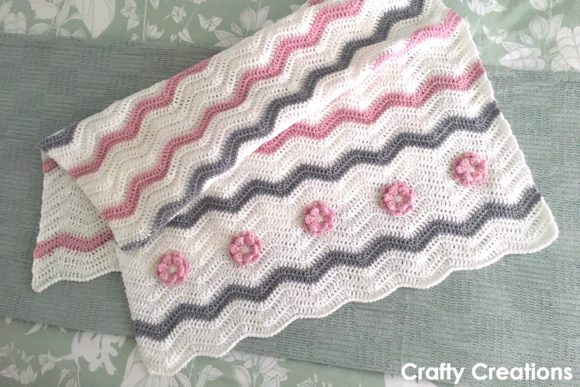
For a finished file to hold your sums against, the Floral Ripple Blanket is a good one to compare. Everything below works without it.
What you need before you start
- A finished size in inches. The ten ideas run from a 40 by 50 inch lap throw to a 50 by 70 inch long throw, plus two widths in centimetres.
- Worsted yarn with the yards printed on the label. Category 4 is what these numbers use, and a thicker or thinner yarn moves every figure.
- A hook that suits the yarn. A 5 mm hook is a common start for worsted, but the ball band is the better guide.
- A tape measure and a kitchen scale. The tape checks your width and the scale checks your swatch.
- One spare skein, bought with the rest. Dye lots change between batches, and a later skein can be a shade off.
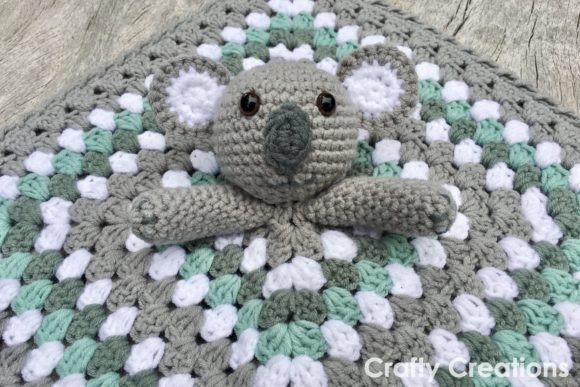
The first thing to know is that nobody can hand you a yardage that fits your hands. I learned this the slow way, and it is why my crochet stitches for blankets guide starts from width, not from yarn. To test your tension on a small project first, the Koala Lovey Crochet Pattern works well.
How many yards a square inch takes, by stitch
- Granny stitch: clusters of double crochet worked into the gaps, about 0.93 yards per square inch.
- Mini bean stitch: a dense textured stitch, about 1.26 yards per square inch.
- Double crochet: about 4.00 stitches per inch across the width.
- Granny cluster: about 2.87 stitches per inch across the width.
Inside one stitch the figure stays steady across sizes. Across stitches it moves by 36 percent. That is the whole reason a single published yardage for a throw is unreliable.
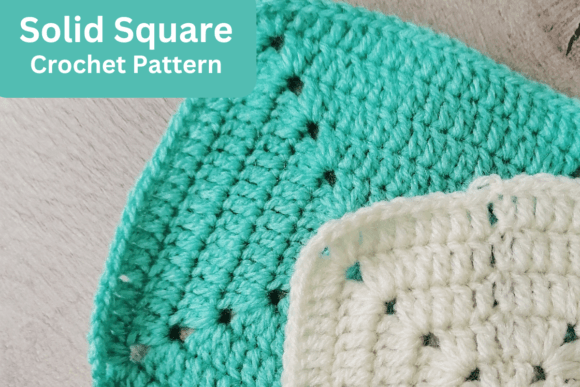
The width has its own spread. On the same worsted yarn, a 130 centimetre throw takes 147 chain stitches in granny cluster and 205 in double crochet. For a pattern to practise the count on, try the Solid Granny Square Crochet Pattern.
| Stitch | Yards per square inch | 50 by 60 inch throw |
|---|---|---|
| Granny stitch | 0.93 | 2,780 yards |
| Mini bean stitch | 1.26 | 3,780 yards |
| Difference | 36 percent | 1,000 yards |
- Read the middle column to see what each square inch costs you.
- Read the right column for the yards to order.
- Add one spare skein to whichever number you pick.
1. Granny stitch lap throw, 40 by 50 inches
A lap throw is 2,000 square inches. At 0.93 yards per square inch, that is about 1,860 yards.
You will finish this one in a couple of weeks of evenings, and the open granny stitch keeps it light on your knees. It has the lowest yardage of the ten, which makes it a good first throw. For a file to compare against, try the Solid Granny Square Crochet Pattern.
2. Granny stitch sofa throw, 50 by 60 inches
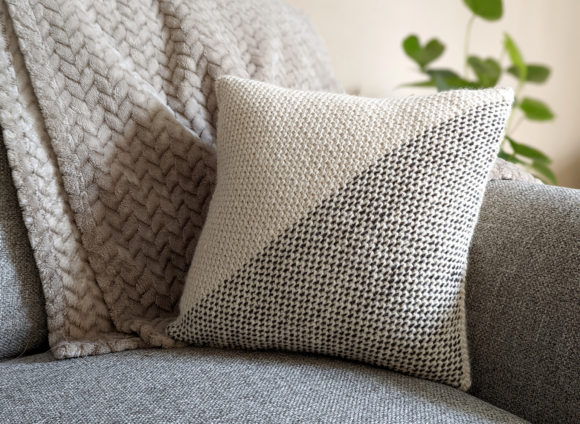
This is the standard throw, 3,000 square inches. It takes about 2,780 yards in granny stitch.
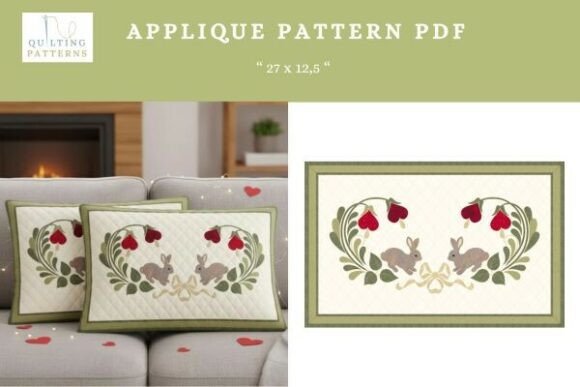
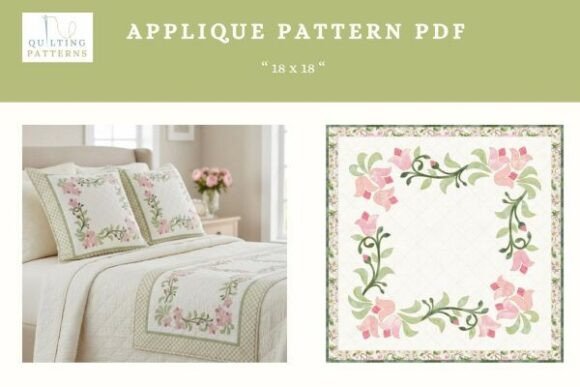
At 200 yards a skein that is 14 skeins, and one spare makes 15. I would pick it if you want the cheapest honest throw that still covers a lap and a knee. For a file to compare against, try the Floral Ripple Blanket.
3. Granny stitch long throw, 50 by 70 inches
Add ten inches of length and the area goes to 3,500 square inches. At 0.93 that is about 3,255 yards.
You buy 475 yards more than the sofa size for ten more inches. Long throws are worth it only if you want the blanket to reach your feet. To compare against a written file, open the Solid Granny Square Crochet Pattern.
4. Mini bean lap throw, 40 by 50 inches
The same 2,000 square inches in mini bean stitch takes 1.26 yards each, so about 2,520 yards.
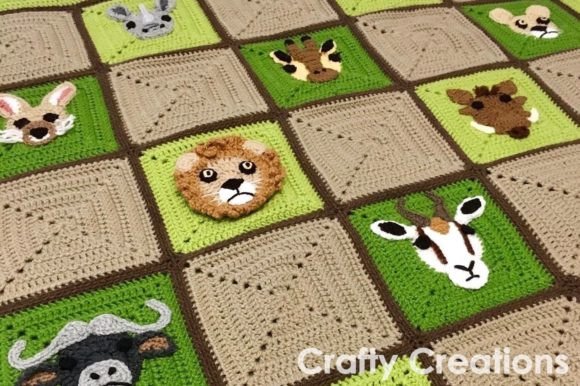
That is 660 yards more than the granny lap throw for the same size. You get a thick, bumpy fabric that holds its shape, which is what the extra yarn buys. For a file to compare against, try the South African Safari Blanket.
5. Mini bean sofa throw, 50 by 60 inches
On 3,000 square inches the figure is 3,780 yards, the high end of the stitch spread.
At 200 yards a skein that is 19 skeins, and a spare makes 20. If your budget stops at 15 skeins, pick a different stitch rather than a thinner throw. To compare against a written file, open the Solid Granny Square Crochet Pattern.
6. Mini bean long throw, 50 by 70 inches
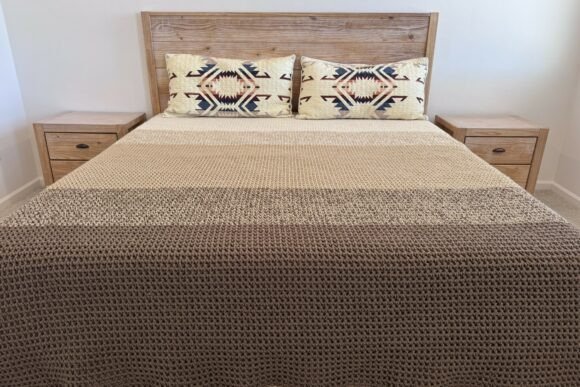
This is the biggest yarn order here. 3,500 square inches at 1.26 comes to about 4,410 yards.
It is a project for people who like a heavy blanket and plenty of time. I only recommend it with a yarn you have already swatched and liked. For a file to compare against, try the Floral Ripple Blanket.
7. Granny cluster throw, 130 centimetres wide
If you think in centimetres, the width is the number to fix first. At about 2.87 stitches per inch, a 130 centimetre throw starts with 147 chains.
The open cluster gives you fewer stitches per row, so each row goes quickly. Check the count against your own swatch before you commit. For a file to compare against, try the Sherbet Baby Blanket Crochet Pattern.
8. Double crochet throw, 130 centimetres wide
The same width in double crochet runs at about 4.00 stitches per inch, so you start with 205 chains.
That is 58 more chains for the same blanket width. The fabric is denser and drapes closer, which suits a throw you will actually wrap around you. A written file to check your sums against is the South African Safari Blanket.
9. Granny cluster throw, 100 centimetres wide
A narrower 100 centimetre throw is 39 inches across. At 2.87 stitches per inch, you need about 113 chains.
A narrow throw suits a single armchair. It also means a shorter first row, which is easier to keep even when you are learning the stitch. For a file to compare against, try the Koala Lovey Crochet Pattern.
10. Double crochet throw, 100 centimetres wide
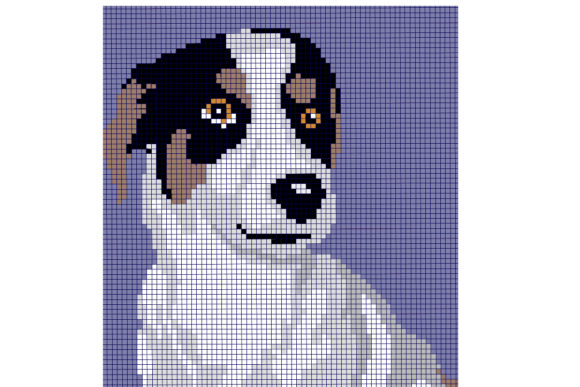
At 4.00 stitches per inch across 39 inches, the chain is about 157.
Pair this with a simple border and you have a finished throw in a short time. My crochet blanket borders guide counts the stitches for the edge. A written file to check your sums against is the South African Safari Blanket.
Seven steps from a swatch to a finished throw
Step 1: Decide the size in inches first
A lap throw is 40 by 50, a sofa throw 50 by 60, a long throw 50 by 70. Write it down before you look at yarn.
Step 2: Convert the size to square inches
Multiply width by length. A 50 by 60 inch throw is 3,000 square inches.
Step 3: Multiply by yards per square inch
3,000 times 0.93 is about 2,780 yards in granny stitch. 3,000 times 1.26 is 3,780 in mini bean.
Step 4: Divide by the yards on the skein
2,780 yards over 200 is 14 skeins. Add one spare and you buy 15.
Step 5: Work a swatch in your stitch
Make it six inches square in the stitch and hook you plan to use. A swatch in a different stitch tells you about a different blanket.
Step 6: Weigh the swatch and count the stitches
Grams times the yards per gram on the band gives its yards. Stitches per inch gives your foundation chain.
Step 7: Buy it all in one batch
Dye lots change between runs. If the colour is short on stock, choose another colour rather than ordering twice.
For a ready sized pattern to follow through these steps, the Sherbet Baby Blanket Crochet Pattern is a gentle one. When you reach the edge, my crochet blanket size chart gives the standard sizes to check against.
If it goes wrong: four ways a throw fails
- You run out three rows from the end. Count yards, not balls, and buy the full count plus one spare in one batch.
- It comes out narrow. Your tension tightens as the work gets heavy. Measure the width every fifth row and loosen your grip when it drops.
- The new skein is a different shade. That is a dye lot change. Order the whole count together.
- It ruffles at the edge. Your border has too many stitches for the row ends. Count them against the border guide before you start.
Each is cheaper to prevent than to fix. If you hit one halfway, I would rather you pull back ten rows than resent the blanket. For a stitch with more texture, my crochet moss stitch blanket page gives the sizes, and the Floral Ripple Blanket breaks a large throw into smaller sections.

Questions people ask before they start
How do you crochet a throw blanket?
Pick the size in inches, choose your stitch and multiply the area by its yards per square inch. Then swatch, chain to your width and check the width every fifth row.
How much yarn does a crochet throw blanket take?
For a 50 by 60 inch throw in worsted yarn, about 2,780 yards in granny stitch and about 3,780 in mini bean stitch.
What size is a crochet throw blanket?
Most throws are around 50 by 60 inches. A lap throw is nearer 40 by 50 and a long throw nearer 50 by 70.
Which stitch uses the least yarn?
Of the two measured here, granny stitch. It takes 0.93 yards per square inch against 1.26 for mini bean.
How many chains do I start a throw with?
It depends on the stitch. For a 130 centimetre width you start with 147 chains in granny cluster and 205 in double crochet.
Do I need to swatch for a blanket?
Yes. A swatch does two jobs for a blanket, it gives your stitch count and your yards per square inch.
Where can I find a pattern to practise on?
Start with a small file such as the Koala Lovey Crochet Pattern, and read my crochet patterns for baby blankets guide for sizes.
How do you crochet a throw blanket for beginners, step by step?
Follow the seven steps above, then chain to your width and work every row in the same stitch. Check the width against the tape every fifth row.
Can beginners crochet a throw blanket with chunky yarn?
Yes, and it is a fast way to learn. Chunky yarn needs far fewer yards, so redo the sums with your own swatch before you buy.
Is there a free easy throw pattern for beginners on YouTube?
There are plenty of free video patterns, but few give the yards for your size. Use a video for the stitch and this page for the order.
How do you hold the blanket while crocheting?
Rest the finished part over your lap and keep the working loops near the hook. A heavy throw drags on your tension if it hangs off the edge.
Can you wash a homemade crochet blanket?
If the yarn band allows it, yes. Use a gentle cycle in a laundry bag and dry it flat so the stitches keep their shape.
How do you crochet a blanket with holes?
Granny stitch leaves small gaps between clusters on purpose. Holes you did not plan usually mean a skipped stitch, so count at the end of each row.
How do you crochet a fleece blanket edge?
Punch evenly spaced holes along the fleece with a small hole punch, then work single crochet through each one. Keep the holes the same distance from the edge.
Key takeaways
- A 50 by 60 inch throw is 2,780 yards in granny stitch and 3,780 in mini bean.
- The stitch moves the yarn total by 36 percent on the same size.
- A 130 centimetre throw starts with 147 chains in granny cluster and 205 in double crochet.
- Buy the full count plus one spare from one dye lot.
- For a file to practise on, try the Solid Granny Square Crochet Pattern.