Quick answer. Pick the stitch by width, not by looks. For a 30 inch (76 cm) blanket, a granny cluster pattern starts on 86 chains, a shell pattern on 92 to 112, and a moss pattern on 97 to 110. The chain count is chains per inch times the width, so multiply before you switch.
You find a crochet c2c moss stitch blanket you love, but the pattern is written in granny stitch, so you swap the stitch and keep the chain count. The blanket comes off the hook narrower than the picture, and the yarn is already bought.
Here is why that happens, in numbers. The same 30 inches takes 86 chains in one stitch and 112 in another, a gap of 30%, and the yarn use barely moves. The sections below give you the table and the formula, so you can switch stitches without a surprise.
For a pattern file that prints the size next to the stitch, Sundae Snuggle is a place to start. For the diagonal basics before you change anything, the corner to corner guide covers the first rows.
Which stitch for a C2C blanket: moss, shell or granny?
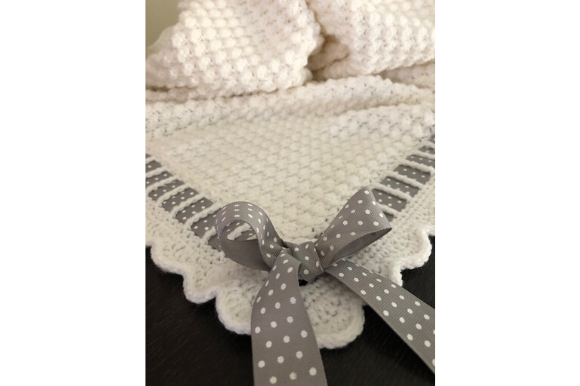
Moss gives you a flat, woven look, granny gives you a soft, open cluster, and shell gives you a scalloped edge. All three work for a throw, so the choice is about the fabric you want and the width you need.
- Moss: a flat fabric that reads as linen, and the one with the most chains per inch of the three in these patterns.
- Granny cluster: the fewest chains per inch here, so the same width needs the shortest start.
- Shell: the widest spread, because two shell patterns can start 20 chains apart.
I use moss when I want a blanket you can drape over a sofa and not see through. I use granny when I want the quickest blanket, and I pick shell only when I am ready to swatch twice.
The honest limit comes first: the numbers here come from row-by-row patterns, not from a diagonal one. They show how dense each stitch is, and they carry over to C2C as a comparison. For a baby size to try a stitch on, Bonnie is small enough to finish fast.
Same 30 inches, three stitches, 86 to 112 chains
I put five patterns side by side at one width, 30 inches or 76 cm. The table shows the start chain, the hook, and the chains per inch that the start chain implies.
| Stitch | Hook | Chains for 30 inches | Chains per inch |
|---|---|---|---|
| Granny cluster | 6.0 mm | 86 | 2.87 |
| Shell, pattern A | 6.5 mm | 92 | 3.07 |
| Shell, pattern B | not named | 112 | 3.75 |
| Moss, pattern A | 5.5 to 6.0 mm | 97 | 3.23 |
| Moss, pattern B | 5.5 mm | 110 | 3.67 |
Read the third column and you will see the spread. Between the lowest, 86, and the highest, 112, the gap is 26 chains, or 30%.
Two things stand out. The stitch name does not decide the width, because the two shell patterns differ by 22% and the two moss patterns by 13 chains. And the hook is not the whole story either, since a small hook and a large one both land inside the same range.
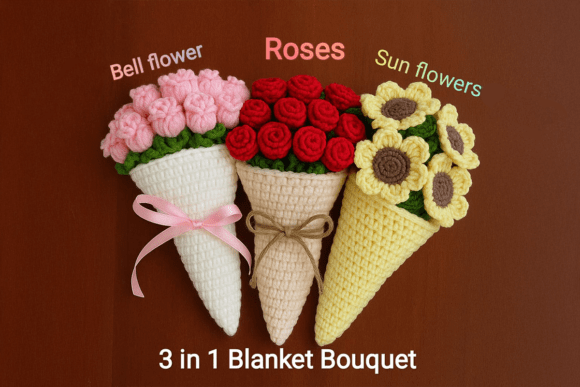
That is the reason a single chain count cannot be copied between patterns. For a bundle that shows several stitches with their own sizes, Blanket Bouquet is worth a look, and the stitch width comparison shows more stitches side by side.
Why a new stitch changes the width of the blanket
Each stitch takes up a different amount of room on the chain. A tall, open cluster eats several chains for every repeat, and a short, tight stitch eats only one or two.
So when you keep the chain count and change the stitch, you are not changing the look only. You are changing how many inches those chains turn into.
Different patterns also make their own choices about corners and turns. Patterns by different designers use different corner and turn methods, so you cannot move the rows of one into another. That is the second reason to treat a stitch swap as a new pattern, not as a recolour.
A pattern prints its chain count for its own stitch and its own hook. When you change either, the chain count is yours to redo.
It helps to think of chains per inch as the stitch’s width. Granny sits at 2.87 and the densest shell at 3.75, so the same inch of blanket needs about a third more chains in the shell.
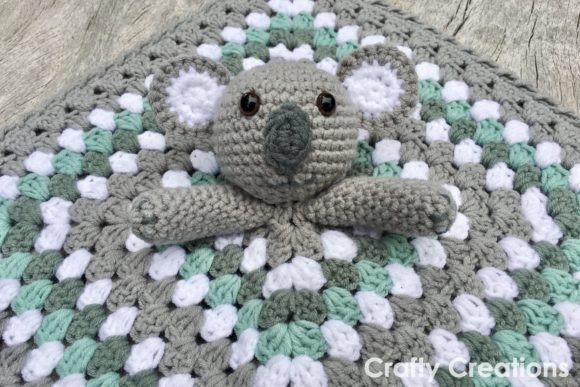
For a pattern with the finished size spelled out, Bonnie and the Koala Lovey both do it.
Does the stitch change how much yarn you need?
Less than you would think. I checked a 30 by 36 inch blanket, which is 1080 square inches or 7.5 square feet, in two of the patterns that name their yardage.
- Granny cluster: 1049 yards, or 0.973 yards per square inch.
- Moss with a decrease stitch: 1000 yards, or 0.926 yards per square inch.
The gap is 49 yards, about 5%. The chain count gap at the same width was 30%. So the stitch changes the width far more than it changes the yarn.
Two limits apply. Neither shell pattern names its yardage, so I cannot put shell in this comparison. And a C2C moss pattern from another designer, at 27 by 34 inches on a 5.5 mm hook, calls for 1230 to 1400 yards, which is 1.34 to 1.53 yards per square inch. That is higher than the row-by-row moss at 0.926, so a diagonal build does look hungrier than a row-by-row one.
For yarn you buy, plan above the printed number and do not round down. For a pattern that states its yardage, the Koala Lovey is one, and the chunky C2C skeins per size chart turns the same sum into skeins.
C2C moss stitch: single crochet and chain 1
The moss stitch in C2C is also called linen or granite stitch. You work it as single crochet and chain 1 along the diagonal, and the look is a tight woven fabric.
The three other C2C moss patterns I compared give you a sense of the size range you will meet:
- 27 by 34 inches: a 5.5 mm hook.
- About 35 by 41 inches: a 6 mm hook.
- 28 by 28 inches: a 5 mm hook, in four skeins.
Notice that the hook goes down as the blanket gets smaller. A moss fabric wants a hook that keeps the chain 1 spaces open enough to bend.
If you are coming from the standard C2C block, remember that moss works a different base from the usual double crochet square. For the first rows of a regular diagonal, the corner to corner guide is the place to compare. For one more moss-friendly design, Mikeisha’s Baby Blanket shows a stated size.
Square or rectangle: where you increase and decrease
A C2C blanket grows from one corner, so the shaping is the same in every stitch. What changes is when you stop widening.
For a square, you increase on both sides until the blanket is as wide as you want, then decrease on both sides. For a rectangle, you increase on both sides until you reach the short side. Then, in the middle, you increase on one side and decrease on the other, and you finish with decreases on both sides.
- Increase on both sides until the width you want.
- For a rectangle, keep that width by increasing on one side and decreasing on the other.
- Decrease on both sides to close the last corner.
The rectangle is where a stitch swap hurts most. If your short side comes out narrower, every row in the middle section is too short, and the length you planned is gone.
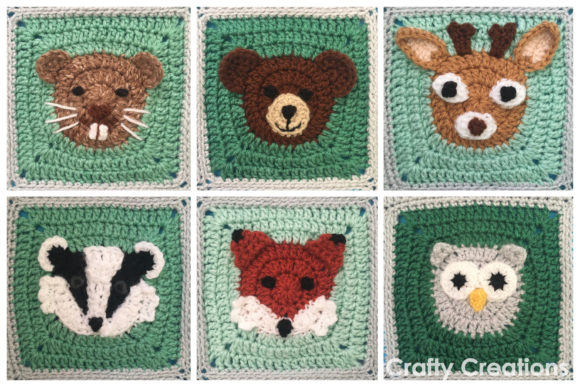
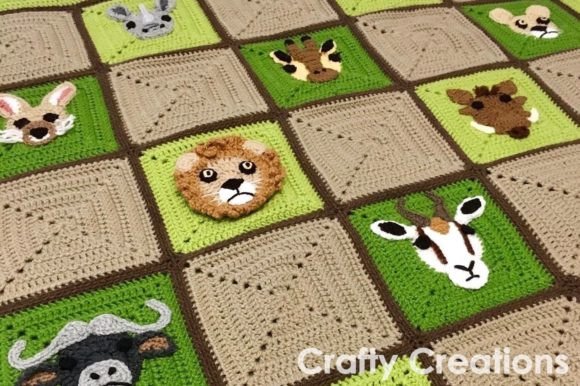
To plan the squares and the centimetres before you start, the C2C size chart in centimetres gives you the squares. For a design that shifts its count at the turns, the Woodland Animal blanket is a clear case.
The chain formula: chains per inch times width
You can build the start chain for any stitch with one sum. Multiply the chains per inch from the table by the width you want in inches.
Take 40 inches as a wider throw. The results are:
- Granny cluster: 2.87 x 40 = 115 chains.
- Shell: 3.07 x 40 = 123, or 3.75 x 40 = 150 chains, depending on the pattern.
- Moss: 3.23 x 40 = 129, or 3.67 x 40 = 147 chains.
The table uses inches. A 76 cm blanket is 30 inches, so you go straight to the 30 inch row.
Then round to the stitch repeat. A cluster or a shell needs a whole number of repeats, so you may add or drop a few chains to land on it. Always check the pattern for the extra chains it asks for at the start.
Pro tip: write chains per inch on a sticky note on the swatch. It saves you from doing the sum twice. For a bigger worked example, the Bernat Blanket balls per throw guide runs the same kind of sum for yarn, and the Tartan blanket is a pattern to try it on.
Swatch before you switch the stitch
The table tells you what other patterns did. It cannot tell you what your hand does, so you need a swatch in the new stitch before you chain a single stitch of the real blanket.
- Chain 30 and work 10 rows of the new stitch in your yarn and hook.
- Lay the swatch flat and measure across the middle, not the edge.
- Divide the chains by the inches you measured. That is your own chains per inch.
- Multiply by the width you want.
Your own number can differ from the table, and that is fine. A tight hand sits near the higher end, and a loose one near the lower.
Wash the swatch if the yarn will be washed. Some yarns relax by a fraction of an inch, and on a wide blanket that fraction adds up.
For a small pattern to practise on, Double Waffle is a baby size, and the C2C baby blanket with the size in cm is another small test.
When the blanket came out too narrow
You will notice it at the first border, when the blanket is a hand narrower than the plan. At that point you have three choices.
- Add a border. A few rounds in the same stitch widen the blanket evenly and cost you the least yarn.
- Change the shape. Keep going and make it a long throw instead of a square one.
- Frog to the swatch. If the gap is large, pull it back and restart with the corrected chain count.
I choose the border most often. It hides a small miss and gives the blanket a frame, and I only frog when the width is off by more than a hand.
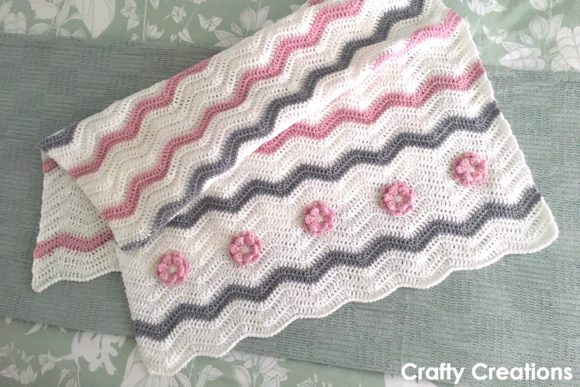
Whichever you choose, write down the chains per inch you actually got, so the next blanket in that stitch starts right. For a design that frames its edge well, the Floral Ripple blanket is a good example.
When a ready pattern with the size printed is easier
The table and the formula do the job when you design the blanket yourself. They do less when the pattern has colour changes or a motif, because each part has its own count.
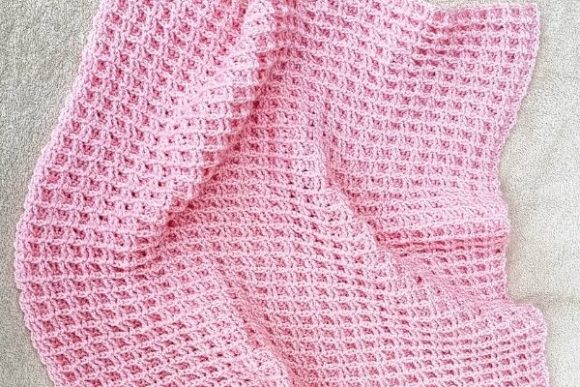
A written file fills that gap. It prints the stitch, the hook, the size and the chain count together, so you do not scale anything yourself. The free patterns I found each give one stitch at one size, and the conversion to a different stitch is left to you.
- Use the formula: one colour, one stitch, any size you like.
- Use a file: a gift, a motif blanket, or a size you cannot test.
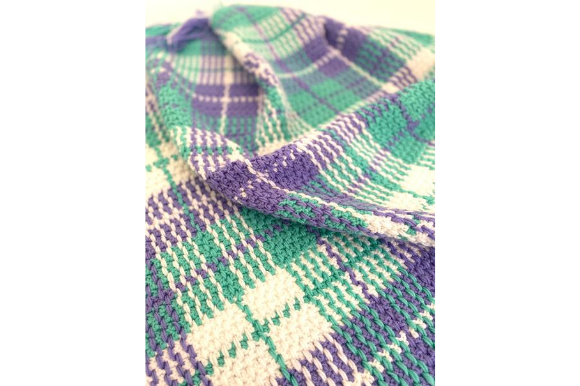
Several designs print their sizes. The South African Safari blanket is a motif design, the Tartan blanket is a colour design, and Blanket Bouquet is a bundle.
For the chart side of a diagonal blanket, the free C2C charts with row counts gives you rows to follow.

Questions about moss, shell and granny in C2C
How do you make a rectangle with C2C moss stitch?
Increase on both sides until you reach the short side of the rectangle. Then increase on one side and decrease on the other until the length is right, and finish by decreasing on both sides.
What yarn works best for a moss stitch blanket?
Pick a smooth yarn that shows the stitch, and check the yards on the band before you buy. A moss blanket of 27 by 34 inches on a 5.5 mm hook calls for 1230 to 1400 yards, so buy more than the lowest figure. The chunky yarn blanket guide covers the thicker end.
How do you start a C2C moss stitch blanket?
You start at one corner and work single crochet and chain 1 along each diagonal row, adding a square each row. The corner to corner guide shows the first rows.
How many chains do I need for a 30 inch blanket?
It depends on the stitch: 86 for a granny cluster, 92 to 112 for shell, and 97 to 110 for moss in the patterns I compared. Multiply your chains per inch by the width to get your own number.
Does moss stitch use more yarn than granny?
Not in the two patterns that state it. A 30 by 36 inch granny blanket takes 1049 yards and moss with a decrease stitch takes 1000. For a pattern that states its yardage, the Koala Lovey does.
Can I swap the stitch in a C2C pattern?
You can, but you have to redo the chain count and the swatch. Patterns use their own corner and turn methods, so their rows are not interchangeable. To see a stated size, Mikeisha’s Baby Blanket prints one.