Quick answer: Start with the smallest thing you can finish in one evening. A 4 inch coaster is 182 stitches, an 8 inch dishcloth is 728, and a 50 by 60 inch throw is 34,125, which is 47 times more. Pick by stitch count, not by the label on the pattern.
You type crochet items for beginners into a search box and get a scarf, a hat and a blanket, all marked easy. I made the scarf first. I was a hundred rows in before I saw that my edges had drifted, and by then it was too late to fix.
The problem was not my hands. The scarf was simply too many stitches to learn on. Below are ten items, sorted by the stitches each one takes, so you can pick the size of your first mistake.
Every beginner project is a count of stitches. At 13 stitches and 14 rows to 4 inches, a coaster is 182, a dishcloth 728 and a scarf 4,095. Choose the count you can finish.
The sums below use one gauge so the items compare fairly. Before you start, check these three things:
- Hook: 5 mm, with worsted cotton yarn.
- Gauge: 13 single crochet and 14 rows to 4 inches.
- Time: one item a day for the first 7 days, no more than 3 hours.
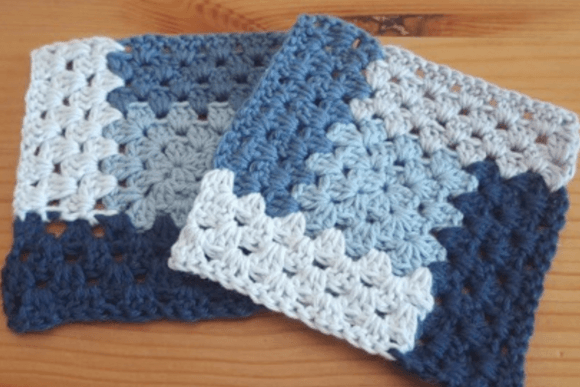
You do not have to buy a pattern for the first three items. When you are ready for a written file, the Color Block Square pattern is an easy one to follow.
What you need before the first stitch
- One 5 mm hook. Buy one and use it until it feels boring. A set of many sizes only gives you more ways to change the gauge.
- Worsted cotton yarn. It shows every stitch, so you can see your own mistakes.
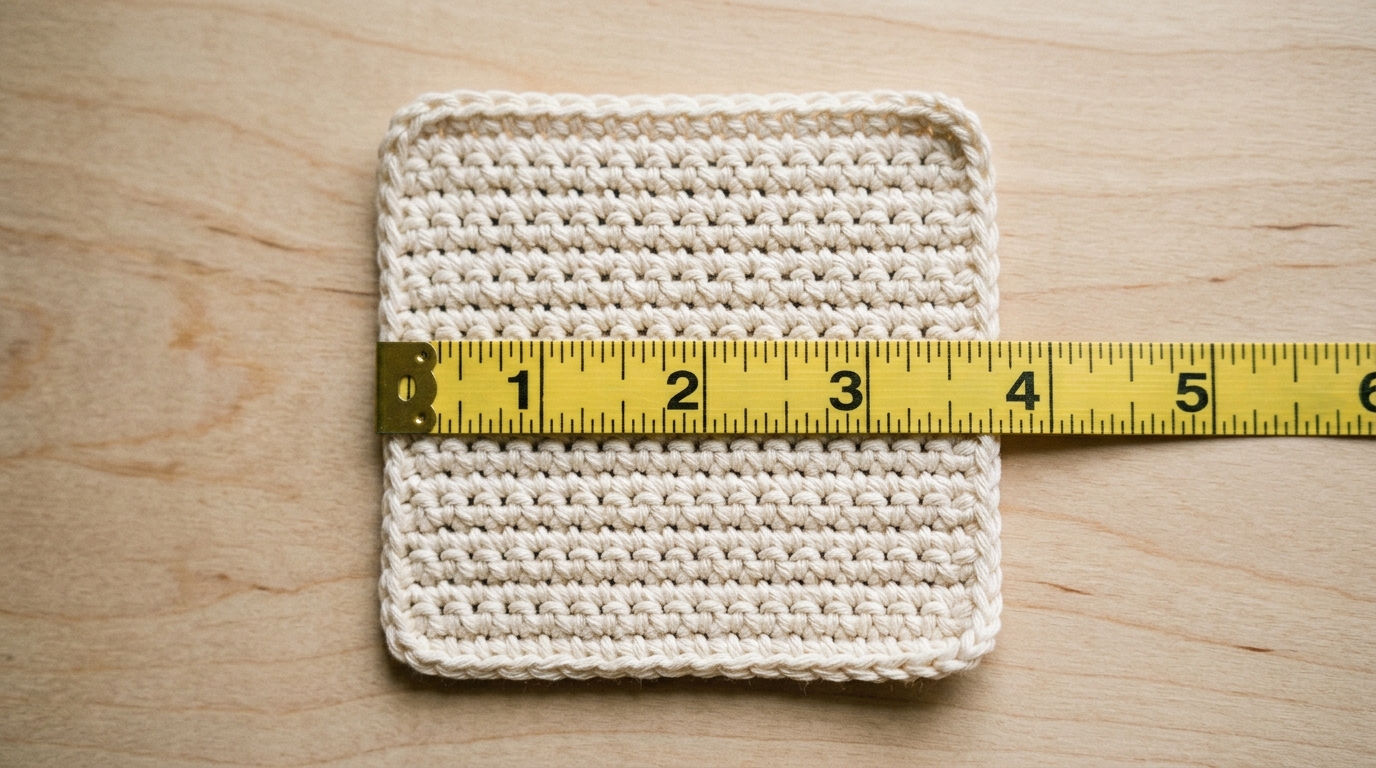
- A tape measure. Row counts lie, and a tape does not.
- Scissors and a blunt needle. That is the whole kit.
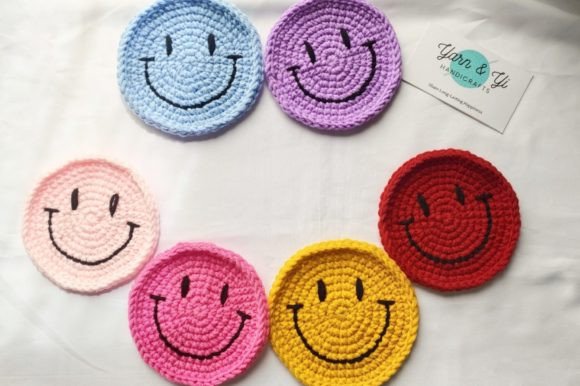
The stitch you choose changes how wide a piece runs. My crochet stitches for blankets guide shows how wide each one is, and the Smile Coaster Crochet Pattern shows how a pattern file lays out its steps.
1. The coaster, 4 inches: 182 stitches
A 4 inch square at our gauge is 13 stitches across and 14 rows. That is 182 stitches, and you can finish it in an evening.
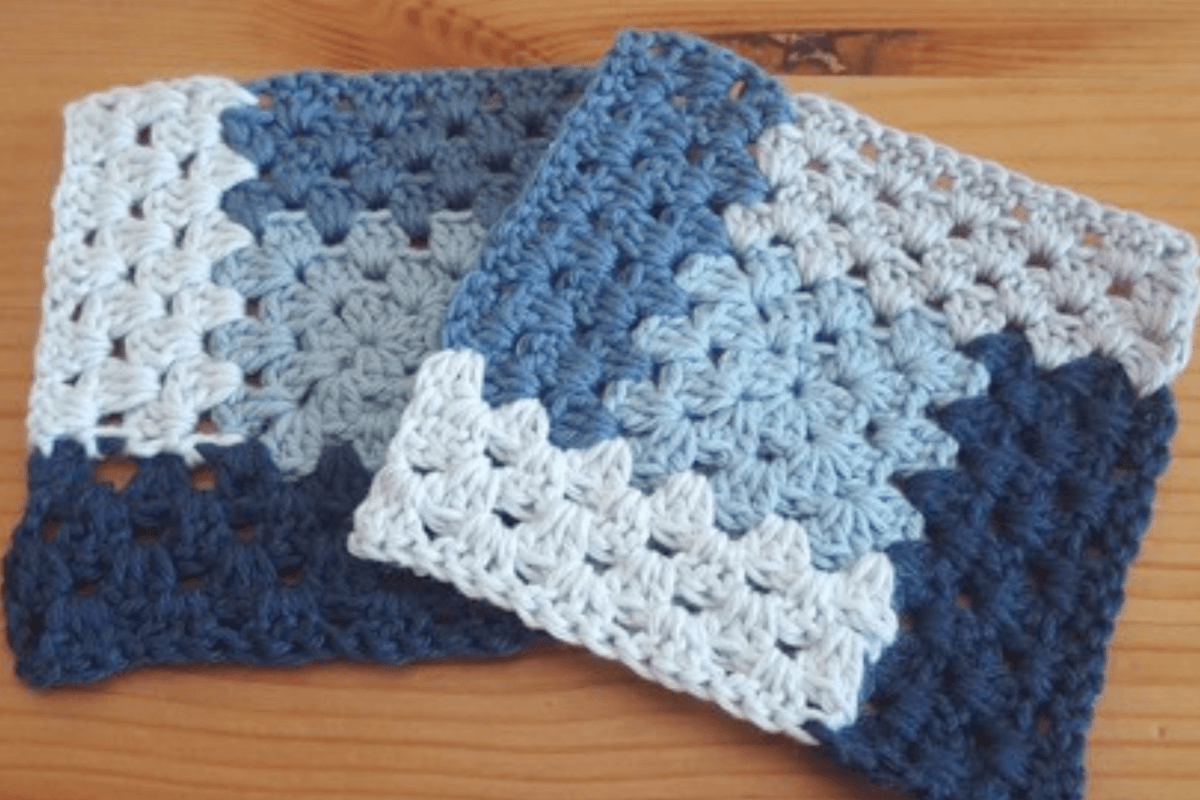
It teaches one thing: putting the same amount of yarn into every stitch. If the sides drift, you see it in 14 rows, not 200. Make two and compare them. A pattern file to compare against is the Color Block Square pattern.
2. The small washcloth, 6 inches: 410 stitches
A 6 inch square is 19.5 stitches across and 21 rows. That is 410 stitches, more than twice the coaster.
Now you have enough rows to notice the edge. Count your stitches at the end of every row. If the count changes, find the row where it happened. A pattern file to compare against is the Smile Coaster Crochet Pattern.
3. The dishcloth, 8 inches: 728 stitches
An 8 inch square is 26 stitches across and 28 rows. That is 728 stitches, and it is the first item that feels like a real project.
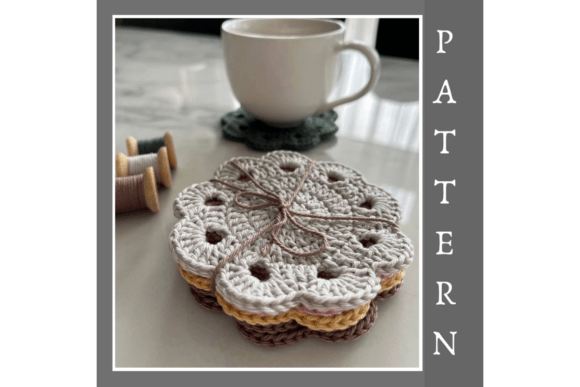
It is also the first one you will use every day. A dishcloth forgives uneven tension, because water does not care. Keep it plain, in single crochet only. A pattern file to compare against is the Crochet Coasters Flower Easy Pattern.
4. The granny dishcloth, 10 inches: 1,138 stitches
A 10 inch square is 32.5 stitches across and 35 rows. That is 1,138 stitches, worked in rounds instead of rows.
Rounds spread any drift around the square, so the cloth stays square when your stitches are not yet equal. The granny square is also the unit behind most beginner blankets. A pattern file to compare against is the Color Block Square pattern.
5. The 13 inch textured cloth: 1,922 stitches
A 13 inch square is 42.25 stitches across and 45.5 rows. That is 1,922 stitches, about 1.7 times the granny dishcloth.
The size is not the step up. The texture is, because a pattern that alternates stitches shows uneven tension as noise. Try it once plain single crochet has started to feel dull. A pattern file to compare against is the Smile Coaster Crochet Pattern.
6. The cushion front, 16 inches: 2,912 stitches
A 16 inch square is 52 stitches across and 56 rows. That is 2,912 stitches for one side, and a cover needs a back as well.
This is the first item where you must hit a size, because the insert will not stretch to fit. You can read more in my crochet cushion cover guide. A pattern file to compare against is the Crochet Coasters Flower Easy Pattern.
7. The scarf, 6 by 60 inches: 4,095 stitches
A scarf 6 inches wide and 60 inches long is 19.5 stitches across and 210 rows. That is 4,095 stitches, 5.6 times the dishcloth.
It is the item every list recommends first. The shape is long and narrow, so a drift that a dishcloth shows in 28 rows stays hidden for 210. Make it the seventh thing you crochet, not the first. A pattern file to compare against is the Color Block Square pattern.
8. The 24 inch square: 6,552 stitches
A 24 inch square is 78 stitches across and 84 rows. That is 6,552 stitches, and it makes a floor cushion or a pet mat.
It is where you meet the first real choice about edges. A plain border will pull the square in, so read my crochet blanket borders guide first. A pattern file to compare against is the Smile Coaster Crochet Pattern.
9. The lap blanket, 36 inches: 14,742 stitches
A 36 inch square is 117 stitches across and 126 rows. That is 14,742 stitches, 20 times the dishcloth.
This is a blanket you can keep on your knee while you work. You will have made six items by now, so the tension is steady and the count is a matter of patience. A pattern file to compare against is the Crochet Coasters Flower Easy Pattern.
10. The throw, 50 by 60 inches: 34,125 stitches
A 50 by 60 inch throw is 162.5 stitches across and 210 rows. That is 34,125 stitches, 47 times the dishcloth and 188 times the coaster.
Do not start here. Come back when you have finished the nine items above and you want a size chart, which my crochet blanket size chart gives you. A pattern file to compare against is the Color Block Square pattern.
A week of items, one a day
The ladder works best as a plan for the first 7 days. You do not need to finish all ten, and you should stop when an item stops being fun. Here is how I would spend the week:
- Day 1: the coaster, twice, so you can compare the two squares.
- Day 2: the small washcloth, counting every row.
- Day 3: the dishcloth, plain and even.
- Day 4: the granny dishcloth, worked in rounds.
- Day 5: rest, and measure the four cloths side by side.
- Day 6: the textured cloth.
- Day 7: look at your edges, and pick the next item from the table.
Keep each session to about 3 hours at most. Tired hands make tight stitches, and tight stitches change your gauge. You will see the difference on the tape measure, and you can fix it on the next row. A pattern file for the rest day is the Smile Coaster Crochet Pattern.
You do not have to memorise the table. You only need to know how many stitches you can finish in a day. Then you can read down the column and stop where you feel stretched. You will know in a minute which item is yours.
All ten items in one table
This is the whole ladder at one gauge. You can see how quickly the count grows, and where it is sensible to stop for a week.
| Item | Size in inches | Stitches |
|---|---|---|
| Coaster | 4 by 4 | 182 |
| Small washcloth | 6 by 6 | 410 |
| Dishcloth | 8 by 8 | 728 |
| Granny dishcloth | 10 by 10 | 1,138 |
| Textured cloth | 13 by 13 | 1,922 |
| Cushion front | 16 by 16 | 2,912 |
| Scarf | 6 by 60 | 4,095 |
| Square | 24 by 24 | 6,552 |
| Lap blanket | 36 by 36 | 14,742 |
| Throw | 50 by 60 | 34,125 |
- The first five items all stay below the cushion front in stitch count.
- The scarf is 5.6 times the dishcloth.
- The throw is 47 times the dishcloth.
To see how a designer lays out a first project, the Crochet Coasters Flower Easy Pattern is an easy file to read. Check the best crochet items for beginners against this table before you buy a pattern, not after.
 Pin it
Six steps to your first stitches
Step 1: Make a slip knot
Pull it snug on the hook, not tight. It should slide when you tug it.
Step 2: Chain 13
This is one 4 inch width at our gauge. Count them, and do not count the loop on the hook.
Step 3: Work single crochet back along the chain
Put the hook in the second chain from the hook. Pull up a loop, yarn over and pull through both.
Step 4: Turn and chain 1
Do this at the end of every row. Skip the chain when you count.
Step 5: Count at the end of every row
You should have 13 every time. If you do not, find the row where it changed.
Step 6: Measure after 14 rows
You should have 4 inches. That is your gauge, and it is the only number the other items depend on.
This is how to crochet for beginners step by step, and you can run it on the coaster first. For the stitches with pictures, the Color Block Square pattern lays out each step.
If it goes wrong: four ways a first project fails
- The sides curve in. You are dropping stitches at the turn. Count every row, and use a stitch marker on the first stitch.
- The sides flare out. You are adding stitches at the turn. Count again and skip the turning chain.
- The fabric is stiff. Your hook is too small for the yarn. Check the size on the band and go up one.
- You give up halfway. The item was too big. Go back one step on the table, and try the Smile Coaster Crochet Pattern instead.
Each is cheaper to prevent than to fix. A small file you can practise on is the Crochet Coasters Flower Easy Pattern.
Questions people ask about crochet for beginners
What is the easiest thing to crochet for a beginner, and what are the best crochet items for beginners?
The smallest square you can finish, a 4 inch coaster of 182 stitches. A dishcloth of 728 stitches is the next step. A file to follow is the Color Block Square pattern.
What are easy crochet projects and simple things for beginners to make?
Flat squares worked in single crochet, because the only skill is even tension. Coasters, washcloths and dishcloths all count.
What to buy when starting crochet: which materials and supplies, and is a kit worth it?
Buy one 5 mm hook, one ball of worsted cotton, a tape measure and a blunt needle. A kit is fine if it holds exactly that. Skip the kit with a dozen hooks.
How to start crocheting for beginners, step by step and easy?
Follow the six steps above on a 13 chain coaster. Count each row, measure after 14 rows, and then move up the table.
What are the best crochet gifts, ideas and patterns for beginners, free or step by step?
Coasters and washcloths make good gifts, and they are quick. A free pattern file to compare against is the Smile Coaster Crochet Pattern.
Can a beginner crochet a bag, food toys or amigurumi?
Not as a first project. Bags and amigurumi need rounds, increases and sewing, which come after the granny dishcloth. Do the first five items first.
Is a scarf a good first crochet project?
Not usually. It is 4,095 stitches, 5.6 times a dishcloth, and a drift hides in the length until it is too late to fix.
What hook size should a beginner use?
A 5 mm hook with worsted cotton. It is the size most patterns for beginners call for, and it makes stitches big enough to see.
How do I stop my edges getting wider?
Count your stitches at the end of every row, and skip the turning chain. If the count is wrong, find the row where it changed. A small file to practise on is the Crochet Coasters Flower Easy Pattern.
Key takeaways
- Pick by stitch count: 182 for a coaster, 728 for a dishcloth.
- The scarf is 5.6 times the dishcloth, so leave it until later.
- The throw is 47 times the dishcloth, so it is not a first project.
- Count your stitches at the end of every row.
- For a file to start from, try the Color Block Square pattern.