Quick answer. A 130 by 170 cm chunky C2C blanket in Bernat Blanket takes about 4.6 skeins by the middle of 61 patterns, and anywhere from 3.4 to 6.4 skeins between the lower and upper quartile. Buy 7. The chart below gives you five sizes in centimetres, and the skein is the 300 g, 220 yard one.
You pick a chunky C2C crochet blanket, open the pattern, and it says 4 skeins. The next pattern, for the same size, says 6. Neither tells you which one to trust when you are standing in the yarn aisle.
You will see the gap yourself. On a 130 by 170 cm blanket the thriftiest pattern in the sample uses 3.4 skeins and the hungriest 10.5, a difference of 3.1 times. The sections below turn that spread into a number you can buy.
For a pattern file that prints the yardage next to the size, Sundae Snuggle is a place to start. For the squares and rows of a chart, the C2C size chart in centimetres covers that side.
How many skeins of Bernat Blanket for a chunky C2C blanket?
A skein of Bernat Blanket yarn is 300 g and holds 220 yards (201 m). The middle of 61 crochet patterns asks for 0.192 skeins per square foot of finished blanket.
That makes the sum short. You work out the area, multiply by 0.192, and you have the middle answer.
- Lower quartile: 0.144 skeins per square foot, the thrifty end.
- Median: 0.192 skeins per square foot, the middle.
- Upper quartile: 0.268 skeins per square foot, the hungry end.
- Extremes: 0.042 and 0.441, which you should treat as outliers.
On a 130 by 170 cm blanket (23.8 square feet), that is 4.6 skeins by the median and 3.4 to 6.4 inside the quartiles. The single hungriest pattern reaches 10.5.
Free patterns print a skein count for their own size only, so you are left to scale it yourself. The sum above does that for you.
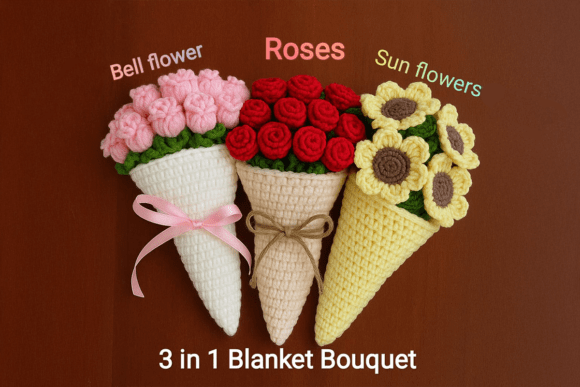
For a file that does the scaling for you, Blanket Bouquet prints its sizes.
Skeins per size: 90 by 120 to 180 by 220 cm
The table gives five common blanket sizes in centimetres. The last column is the upper quartile rounded up to whole skeins, which is the number I would put in the basket.
| Finished size | Square feet | Lower quartile | Median | Upper quartile | Most in the sample | Buy |
|---|---|---|---|---|---|---|
| 90 by 120 cm | 11.6 | 1.7 | 2.2 | 3.1 | 5.1 | 4 |
| 100 by 130 cm | 14.0 | 2.0 | 2.7 | 3.8 | 6.2 | 4 |
| 130 by 170 cm | 23.8 | 3.4 | 4.6 | 6.4 | 10.5 | 7 |
| 150 by 200 cm | 32.3 | 4.7 | 6.2 | 8.7 | 14.2 | 9 |
| 180 by 220 cm | 42.6 | 6.1 | 8.2 | 11.4 | 18.8 | 12 |
Read down the median column and you will see the blanket grow faster than the width. Going from 130 by 170 to 180 by 220 adds only 50 cm to the width, but it takes 8.2 skeins instead of 4.6.
The reason is area. You get 42.6 square feet against 23.8, and the yarn follows the area, not the edge.
Whole skeins are the only thing the shop sells, so the final column rounds up. A throw that finishes with half a skein left is cheap insurance. A throw that runs out 20 rows short is not.
If you want the same sum for a file you already own, Double Waffle is a small enough size to test the method on first.
The formula: square feet times 0.192
You can run the sum for any size, not just the five in the table. It takes three steps.
- Multiply the width in cm by the length in cm, then divide by 929. That is the area in square feet.
- Multiply the area by 0.192 for the median number of skeins.
- Multiply the area by 0.268 for the upper quartile, and round up.
For a 130 by 170 cm blanket, 130 x 170 / 929 gives 23.8 square feet. Then 23.8 x 0.192 is 4.6 skeins, and 23.8 x 0.268 is 6.4.
If you think in yards, multiply the skeins by 220. The same blanket is 748 yards at the lower quartile, 1012 at the median and 1408 at the upper quartile.
I work in skeins for the shop and yards for the leftovers. The yard figure lets me check a half-used skein from last time against the new blanket.
Pro tip: write the area on the label of the first skein, so you do not do the sum twice. For a second worked example, the DIY throw yardage number runs the same sum, and Bonnie is a small size to try it on.
Why one pattern takes 3 skeins and another 6 for the same size
The spread comes from the pattern, not from a mistake in the count. On 50 by 60 inch blankets, free patterns ask for anything from 1 to 9 skeins of Bernat Blanket, and the middle is 4.
Stitch is one cause. A lacy, open stitch uses fewer skeins than a dense one, so two blankets of the same size can differ by half.
Tension is the other. If your hand is tight you pack more yarn into each square, and if it is loose you spread it. You cannot see this from the pattern text.
- Open stitch: fewer skeins, a thinner blanket, more drape.
- Dense stitch: more skeins, a heavier blanket, less drape.
- Tight hand: more skeins for the same size.
- Loose hand: fewer skeins, but a floppier fabric.
The result is that a pattern is honest about its own blanket and silent about yours. That is why the chart above gives a range, and why I rely on the upper end.
If you would rather follow a file that states what it used, the Jaske throw is written as one complete blanket rather than a swatch.
Blanket, Blanket Big and Blanket Extra are three different skeins
The word Blanket is on three different skeins, and they do not hold the same amount. This is the mistake that costs you the most, so check the band before you copy a number.
Bernat Blanket is 300 g and 220 yards. Bernat Blanket Extra is 300 g and only 97 yards, which is about 89 m. Per 100 g that is 73 yards against 32.
The size shift is bigger than it looks. A blanket that needs 2000 yards is 10 skeins of Blanket and 21 of Blanket Extra.
- Blanket: 220 yards a skein, the one this chart is built for.
- Blanket Extra: 97 yards a skein, so you need more than twice the number of skeins.
- Blanket Big: a jumbo yarn, and its pattern counts do not carry over.
One popular C2C throw of about 54 by 54 inches on Blanket Big asks for nine skeins. Nine looks like a lot, until you remember it is a different skein.
Never convert a pattern from one of these yarns to another by skein count. Convert by yards, and use the band on the skein in your hand. Counting yards, not balls explains the conversion step by step.
A written file helps here because it names the yarn it assumes. French Countryside is a good example of a design where you should check that line before buying.
Does C2C use more yarn than other stitches?
No, and I expected the opposite. Four C2C patterns in the same sample use 0.144 to 0.287 skeins per square foot, with a middle of 0.192.
That is the same middle as all 61 patterns together. C2C sits inside the general range, not above it.
The diagonal build makes it feel hungrier, because every row is longer than the last until the halfway point. But the area is what counts, and a C2C blanket of 23.8 square feet needs about what any other crochet blanket of that size needs.
C2C does hide one cost. A square-built blanket tells you its size only at the end, so a miscount of squares shows up as a miscount of skeins. For the squares side, the C2C charts with row counts is the place to check.
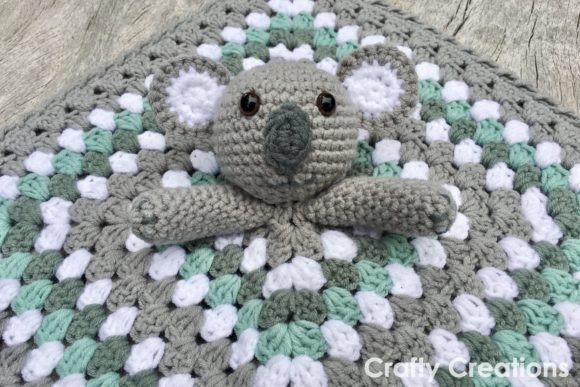
Four patterns is a small sample, and I would not claim more than that. It is enough to say you should not add a whole extra skein just because the stitch is C2C. For a stated size to compare against, the Koala Lovey is a small one, and the stitch width comparison shows what other stitches do.
What size hook for a super bulky C2C blanket?
For super bulky yarn the range you will see quoted is 8 to 15 mm, with the yarn rated as weight 5 to 7. Pick the size that makes the fabric soft, not stiff.
Chunky yarn punishes a small hook. Your fabric turns hard, and every skein buys you less blanket than the table says.
Here is how I check it before I start.
- Make one square in the hook you picked.
- Bend it. If it holds its shape like cardboard, go up a size.
- If you can see daylight through the stitches, go down.
A change of hook changes the skeins in the chart. A looser fabric is closer to the lower quartile, and a tight one closer to the upper. That is one more reason to buy the upper figure.
The right hook also makes the turns easier. The Tartan blanket is a pattern where the stitch count shifts at the turns, so a loose hook keeps it readable.
Buy the upper quartile, not the median
The median is the middle of the sample, and half of the patterns need more. If you buy the median, you have a coin-flip chance of running out.
The upper quartile is the figure that three out of four patterns stay under. For 130 by 170 cm that is 6.4, so you buy 7.
The extra skein is not waste. Leftover yarn is a repair kit for the first hole, and it covers a tension drift or a wider border.
- Buy 7 for a throw: 130 by 170 cm.
- Buy the same dye lot: the lot number is printed on the band.
- Keep the bands: if you need another skein, the shop will ask for it.
I would rather return one unopened skein than hunt for a missing one. A fresh skein from a different batch can show as a stripe, and chunky yarn does not hide a stripe.
That is the honest limit of this chart. It tells you how many skeins most patterns use, not how many yours does, so the margin is the part you cannot skip. For the count printed in the file, Mikeisha’s Baby Blanket states its size.
I ran out of yarn halfway through
You will notice it around the middle of a C2C blanket, because the rows start to shorten. If you are close, count the rows you have left and the yarn in your hand.
There are three moves, in order of how much they cost.
- Finish smaller. Start the decrease rows early and end with a slightly shorter blanket.
- Buy the same lot. If the band is still in the bin, the shop can often find the same lot number.
- Spread a new lot. Alternate two rows of the old skein and two of the new one across the join, so the change is a gradient, not a line.
The third move works because chunky yarn shows a hard edge between two lots. When you blend the two, you soften the line.
The first move is the one I use most. A blanket that is a little short still works as a lap blanket for you, and a mid-blanket stripe never goes away.
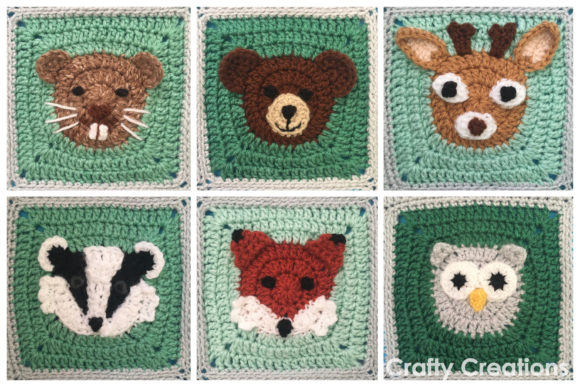
If you plan to change direction mid-blanket, the Woodland Animal blanket shows where the shaping can start without breaking the count.
When a ready pattern with the skeins printed is easier
The chart does the job for a plain blanket you design yourself. It does less when the blanket has colour changes, because each colour has its own count.
A written file fills the gap. It prints the yarn, the hook, the size and the skeins in one place, so you do not scale anything yourself.
For a first blanket, or a gift that must come out to a stated size, I would pay for that. For a plain blanket in one colour, the sum above is enough.
- Use the chart: one colour, one stitch, a size of your choice.
- Use a file: several colours, a gift, or a size you cannot test.
Several designs print their sizes. Blanket Bouquet is a bundle, Bonnie is a baby size, and the Koala Lovey is small enough to finish in one evening.
If none of them has your size, Mikeisha’s Baby Blanket is another way to see how a stated size reads. For stitch choices before you buy, the Bernat Blanket skeins per throw guide has the inch version of this table.

Questions about chunky C2C yarn amounts
How much yarn do I need for a chunky C2C blanket?
For a 130 by 170 cm blanket in Bernat Blanket, about 4.6 skeins by the median and 3.4 to 6.4 skeins inside the quartiles. Buy 7.
What size hook for super bulky C2C blanket?
The range quoted for super bulky C2C is 8 to 15 mm. Pick the size that gives a soft fabric you can bend, not a stiff one.
How to transition from increases to decreases in C2C crochet?
Increase on both sides until the blanket is as wide as you want. Then decrease on one side and keep increasing on the other until the length is right, and finish by decreasing on both sides. In a decrease row you slip stitch across and join into the previous square instead of chaining a new one.
Show me tips for avoiding holes at the turning points
Turn the work firmly, make the turning chain tight, and join the first stitch of the next square into the top of the last stitch. A loose turn is where the gap opens, and chunky yarn shows it.
What are the best super bulky yarns for blankets?
Look at yards per skein before the name. Super bulky yarns hold anywhere from 16 to 109 yards per 100 g, so the same label can mean seven times the difference in skeins.
How to start a C2C crochet blanket?
Chain 6, make a double crochet in the fourth chain from the hook and the next two chains, then turn and add a square each row. The corner to corner guide shows the first rows.
Can you crochet a chunky blanket?
Yes. A chunky blanket is faster than a worsted one because each stitch covers more area, but it takes more skeins and a bigger hook. To see the sizes printed, Sundae Snuggle lists them.
Is Blanket Extra the same as Blanket?
No. Blanket Extra holds 97 yards in a 300 g skein and Blanket holds 220 yards, so a pattern for one does not fit the other. Check the band before you buy, and for a file that names its yarn, French Countryside is one to read first.