Quick answer: one ball of the thick fluffy chenille sold for blankets covers roughly 212 square inches of finished blanket worked by hand, so a 50 by 60 inch throw takes about 15 skeins. That figure comes from a blanket somebody actually measured after it was done, not from the yardage printed on the label. The label is the part that keeps sending people back for a second order.
Two skeins can sit side by side on the same shelf, both labelled chunky blanket yarn, and hold wildly different amounts of yarn. A #10 jumbo chenille skein weighs 8 oz and carries 20 yards. Bernat Blanket Extra weighs 10.5 oz and carries 97 yards. Same shelf, same category name, and the second one holds about 3.7 times more yarn per ounce than the first.
So when a pattern tells you it needs 300 yards, that number is meaningless on its own. Written for the 97 yard skein, 300 yards is three skeins. Written for the 20 yard skein, it is fifteen. Nothing on either label warns you which one the pattern meant, and this is the single reason so many first chunky blankets come out as lap blankets.
Yardage is not a measure of how much blanket you get. Thickness eats length: a strand an inch across runs out fast, and the same weight of a thinner chenille stretches nearly four times further. Size your project by area covered, not by yards on the band.
What a chunky blanket actually needs before you start
The materials list for this project is short, which is most of the appeal.
- #10 jumbo chenille yarn. The strand measures 1 inch (25 mm) across. Each skein is 8 oz (226.8 g) and 20 yds (18.5 m) of 100% polyester. Buy it all in one order, in one go, for reasons covered further down.
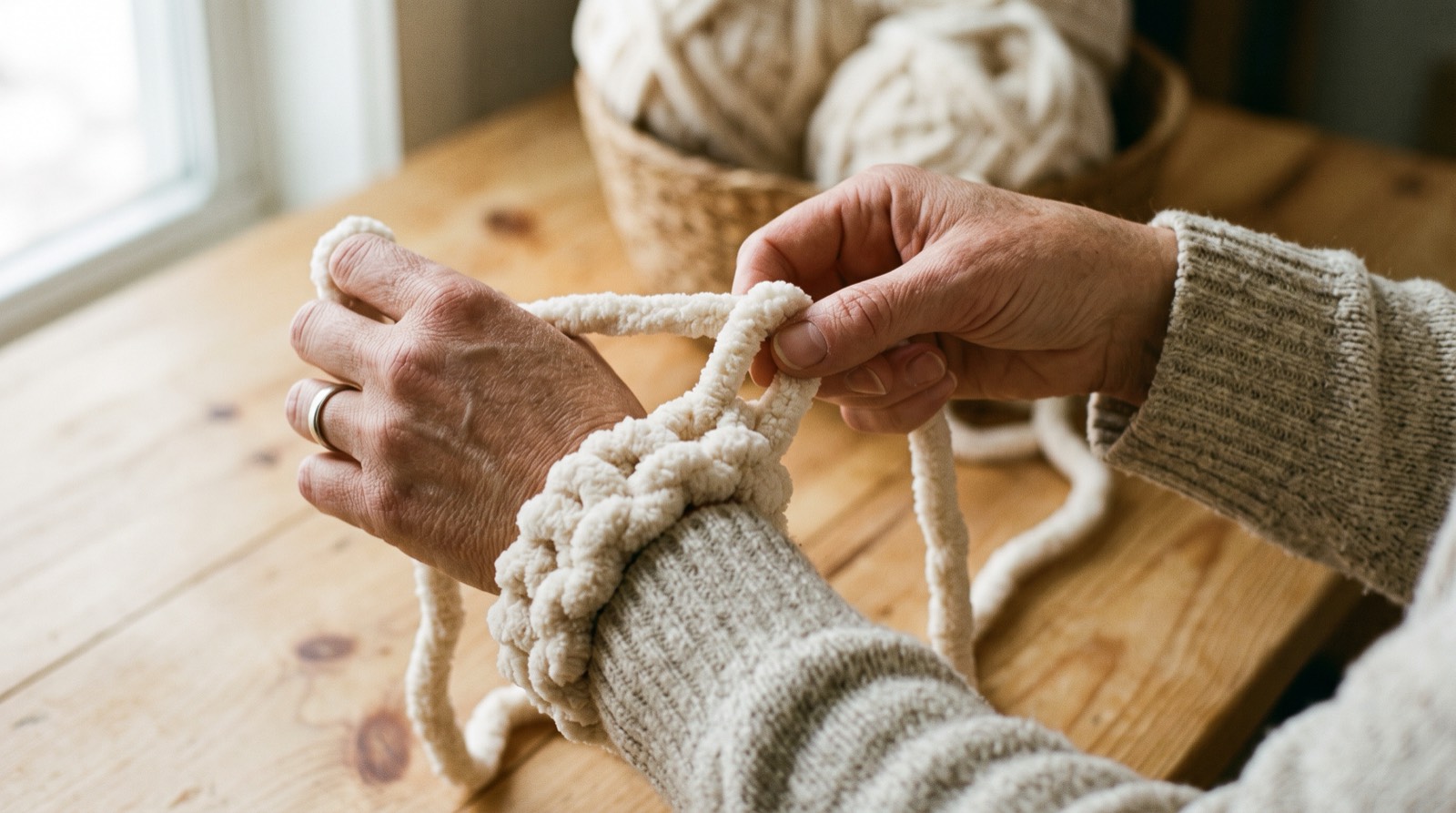
- Nothing else, if you work it by hand. At this thickness your forearms are the needles. Loops sit big enough to pull through with your fingers.
- Or US 50 (25 mm) needles, which is the size the yarn band calls for. Gauge at that size runs 2 stitches and 2 rows to 4 inches (10 cm), which tells you how fast this moves: a single row of a throw is a couple of dozen stitches.
- A tape measure. Not optional. The whole method below rests on measuring as you go instead of counting rows.
- A pair of sharp scissors for the joins.
If you have crocheted before and want a hook in your hand instead, a chunky blanket still works, but you are then reading a stitch pattern rather than the arm-knit method here. Our beginner crochet blanket guide covers that route from the first chain.
 Pin it
Seven steps from a pile of skeins to a finished blanket
1. Decide the finished size in inches, first
Not “a throw”. Not “big enough for the sofa”. Write down two numbers. A baby blanket sits around 30 by 40 inches, a lap blanket around 40 by 50, a sofa throw around 50 by 60, a twin bed cover around 60 by 80. Pick one and commit, because every other decision follows from it.
2. Convert the size into skeins using area, not yards
 Pin it
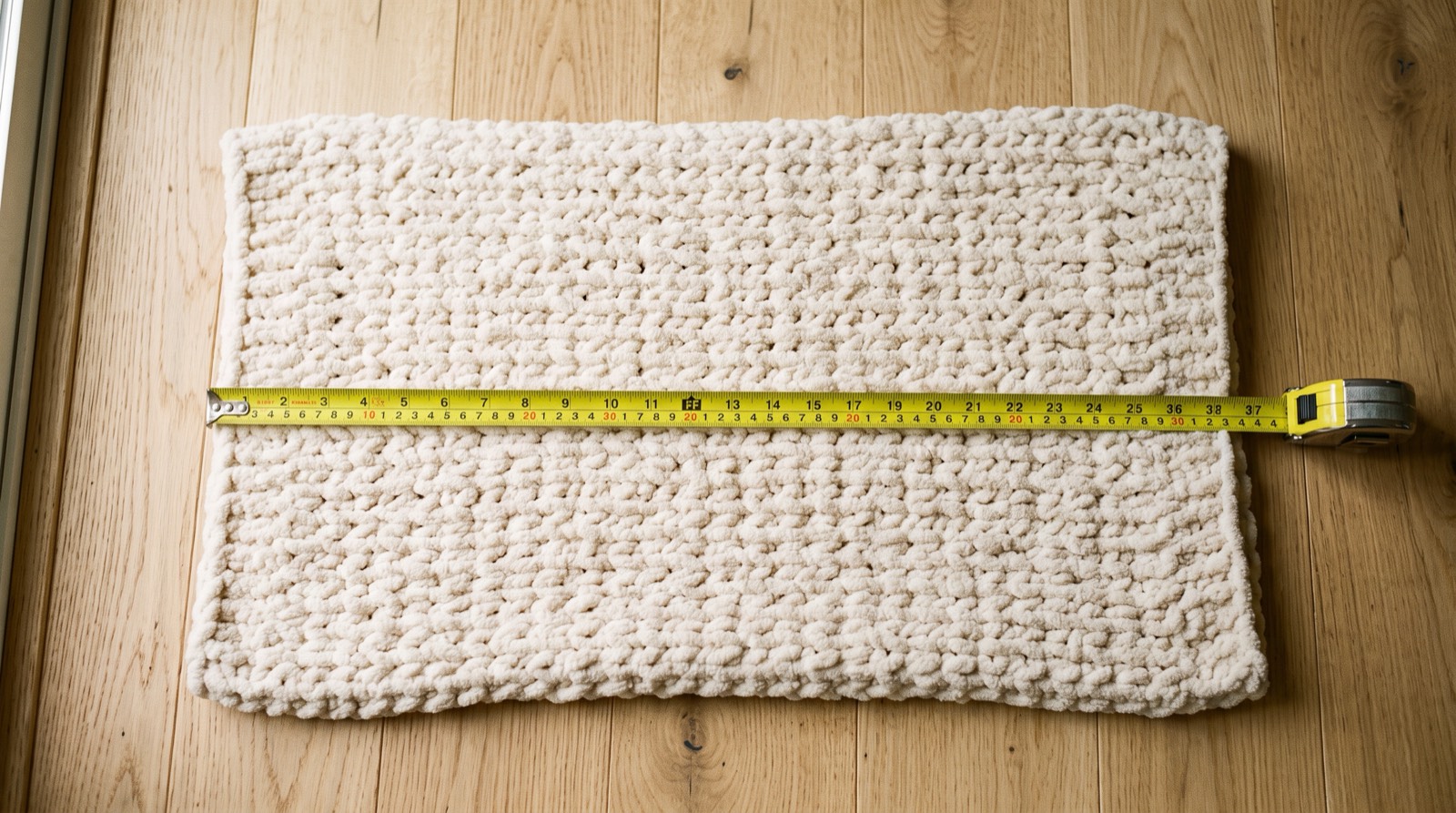
Here is the arithmetic that patterns skip. One maker finished a blanket from 12 skeins of #10 jumbo and measured the result at 52 by 49 inches. That is 2,548 square inches from 12 skeins, or about 212 square inches per skein. Run your own target through that number:
| Finished size | Area | #10 jumbo skeins |
|---|---|---|
| 30 x 40 in (baby) | 1,200 sq in | 6 |
| 40 x 50 in (lap) | 2,000 sq in | 10 |
| 50 x 60 in (throw) | 3,000 sq in | 15 |
| 60 x 80 in (twin) | 4,800 sq in | 23 |
One measured blanket is one data point, and tension moves the result: work loose and you cover more ground per skein, work tight and you cover less. Treat the column as a floor, not a promise. A second maker ordered 8 skeins for a twin bed, ran out, ordered another 8 and finished with nothing left over. Their 16 sits below my 23, which most likely means their bed cover was smaller than a full 60 by 80 or their loops ran looser than the measured blanket’s. It does not contradict the direction of the error, and the direction is what matters here: everybody in these reviews under-buys, nobody over-buys.
The #10 jumbo these numbers were measured from ships in packs of 8, so read your row off the table and round up to whole packs before ordering.
3. Order the whole amount at once
Chenille colourways rotate. Coming back three weeks later for four more skeins of the same shade is a gamble, and a second batch of the same colour name can still read differently against the first. Order the full count from step 2 in one go, and add one spare skein on top.
4. Cast on by measuring, not by counting
Cast loops onto your forearm one at a time, and keep going until the row of loops measures the width you wrote down in step 1. Lay the tape measure alongside it while the loops sit relaxed, not stretched out along your arm. Count them only after the tape agrees, then write that number down, because it is now your row length for the rest of the blanket.
 Pin it
5. Work the body and check the width every fifth row
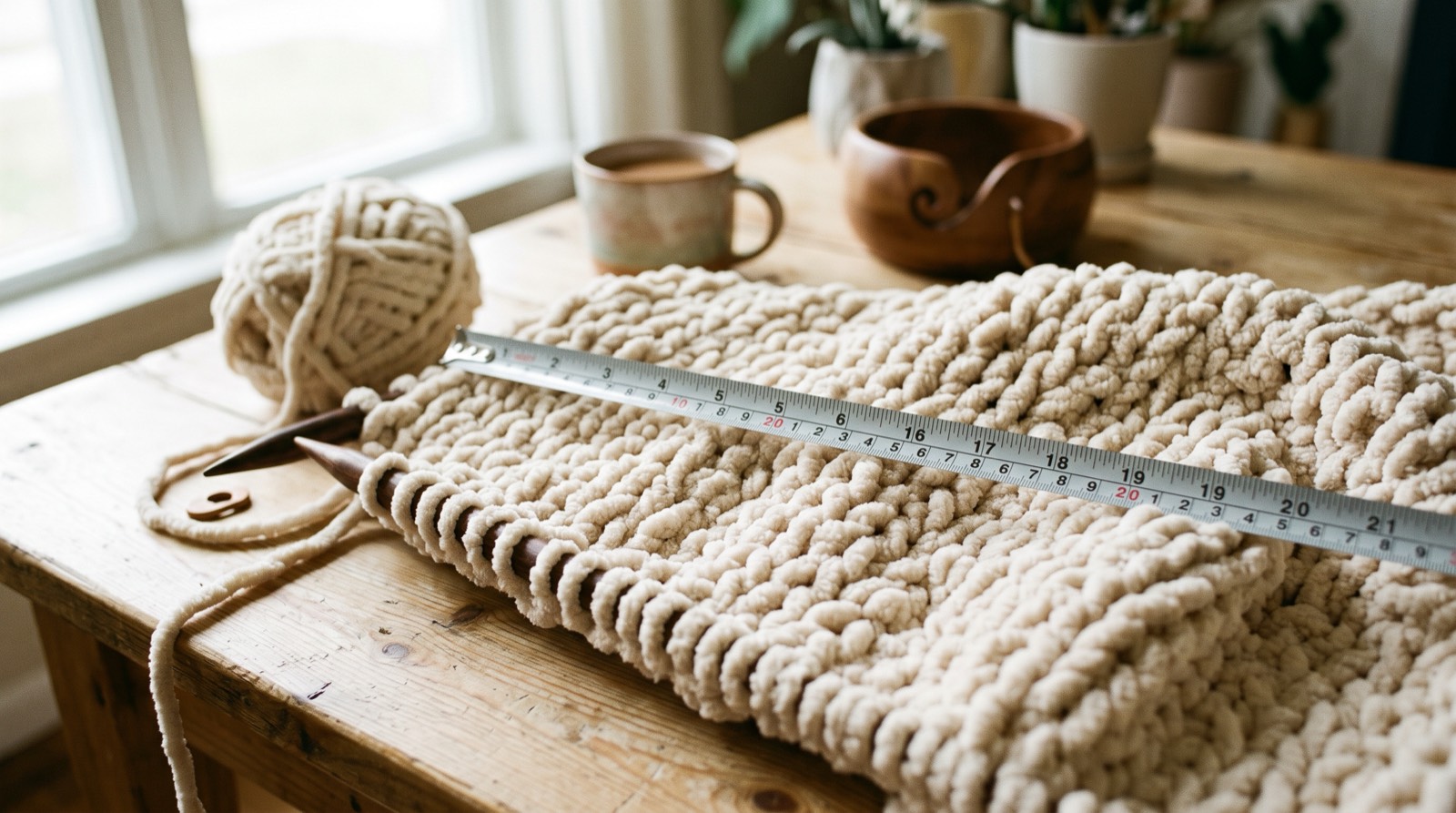
Chunky work drifts. Loops pulled a little tighter on row 20 than on row 5 will narrow the blanket by inches over its length, and you will not notice until it is off the needles. Lay the tape across the work every five rows. Correcting two rows is quick, correcting twenty is not.
 Pin it
6. Join new skeins without knotting
 Pin it
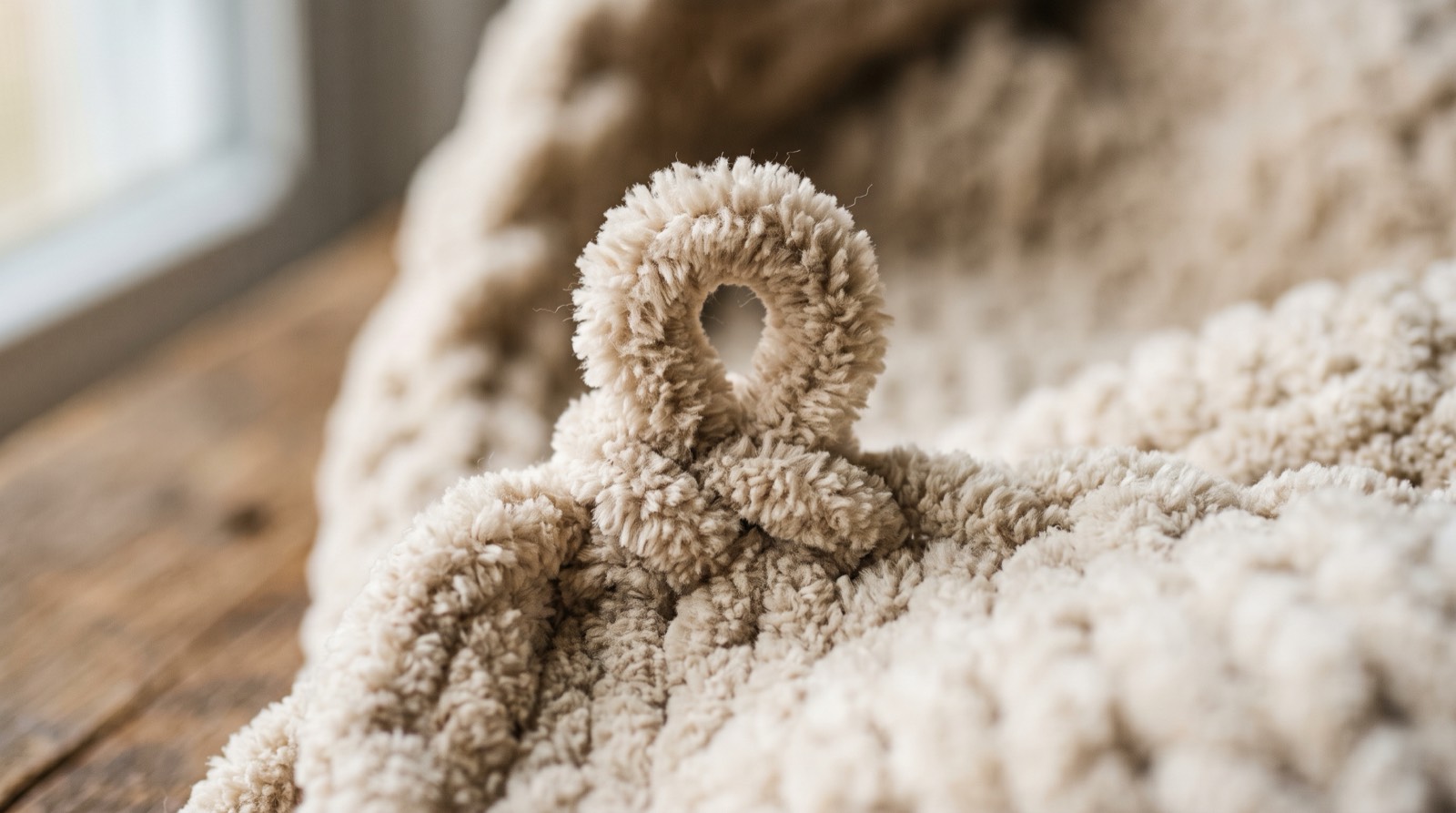
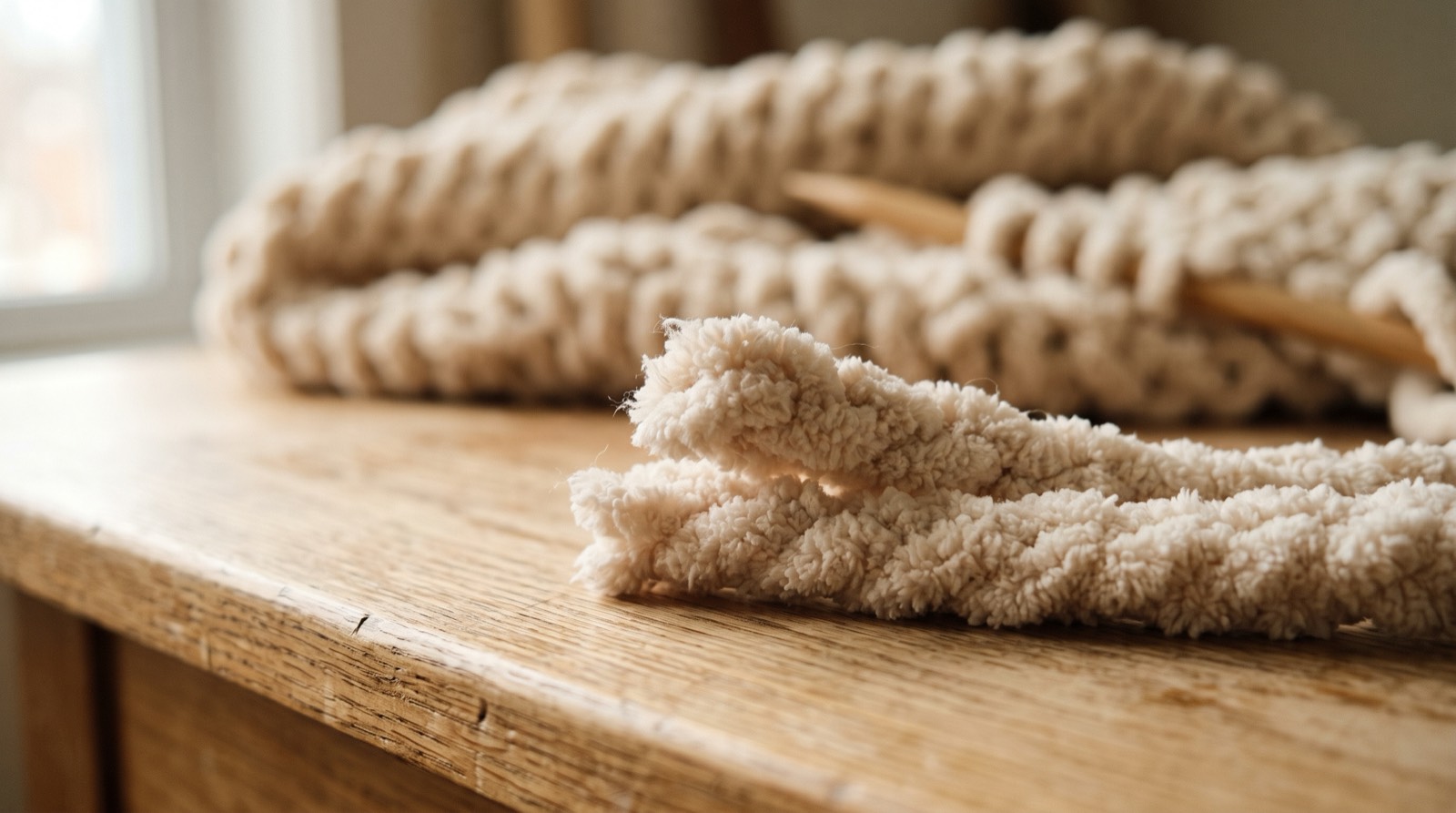
Chenille of this weight does not want a knot in it. A knot at this thickness reads as a lump you can see from across the room and feel through the blanket. Lay the tail of the finished skein against the start of the new one, overlap them by several inches, and work the doubled section as one strand for those few stitches. The join disappears into the pile.
7. Bind off and wash it once before it goes anywhere
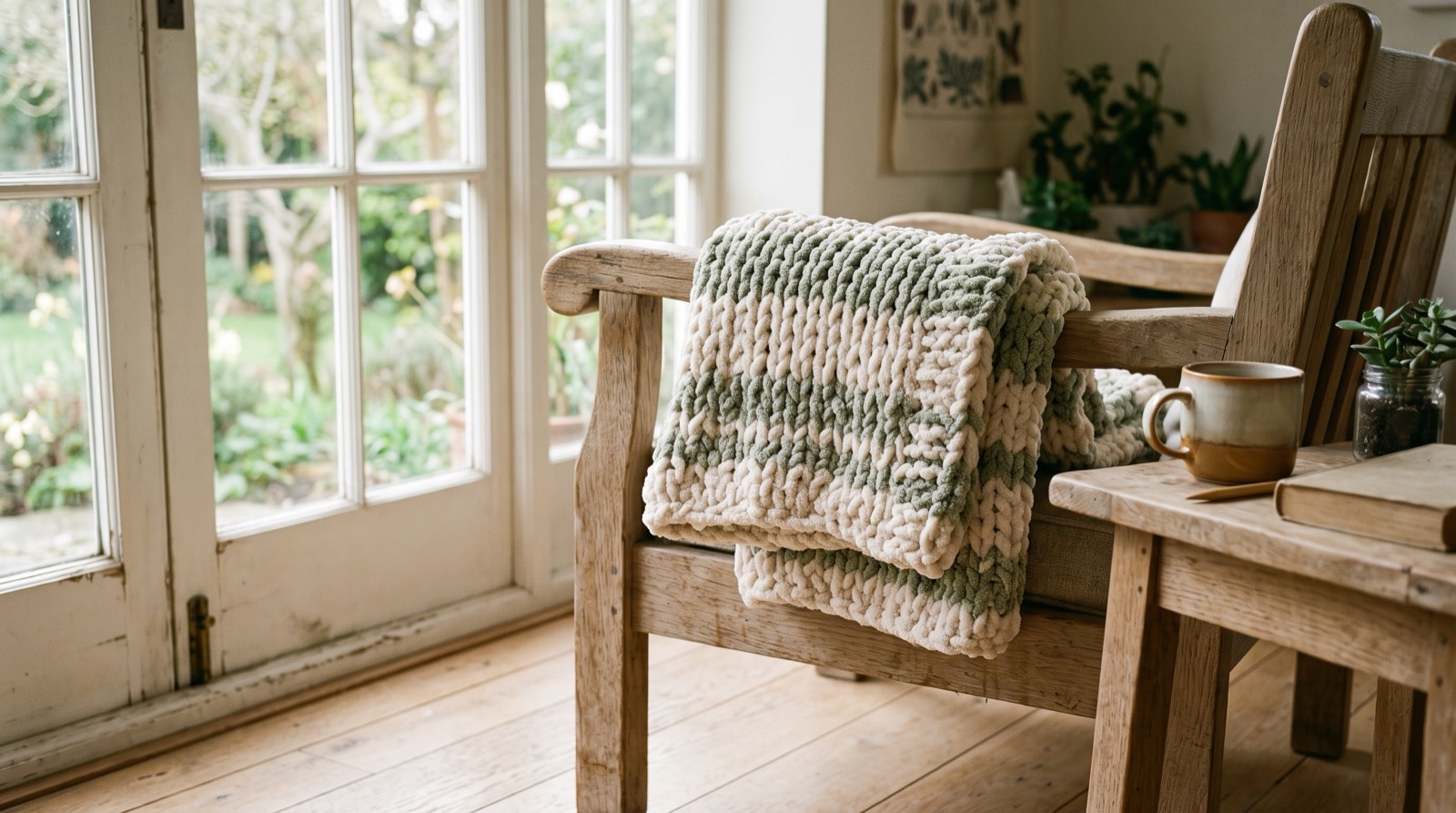
Pull the last loop through, thread the tail back through the final few stitches, trim. Then wash it, before gifting or photographing, so the first wash happens under your supervision rather than someone else’s. The care instructions on this yarn are specific: machine wash cold, water no hotter than 30 C (86 F), tumble dry low or dry flat, no bleach, no iron, no dry cleaning.
 Pin it
Five ways a chunky blanket goes wrong
Trusting the yardage on the band. Buyers of this yarn report skeins measuring shorter than the printed figure, one of them putting a tape to it and getting 22 yards against a labelled 25. Amazon’s own review summary flags yardage as the most divided point on the product. Build the shortfall into your order rather than discovering it at row 40.
Working it tight. Chenille sheds when it is pulled hard, and pulling hard also shrinks your coverage per skein, so a tight tension costs you twice. Loose loops are correct here, not sloppy.
Assuming two “chunky” yarns are swappable. They are not. Swapping a gauge 7 yarn into a #10 jumbo pattern changes both the yardage and the stitch size, and the finished blanket ends up a different object. Worth adding: even the label can be wrong. One buyer of a jumbo gauge 7 chenille went as far as disputing that rating in a review, saying it worked up as a bulkier 5 to 6 and that they had to braid strands together to get the thickness they were after. Measure the strand yourself before you commit fifteen skeins to a pattern.
Ironing it or sending it out to be cleaned. Both are on the do-not list for this fibre. Polyester chenille flattens permanently under heat, and the pile is the entire point of the blanket.
Hiding a knot inside the work. Skeins are sold as continuous strands, and buyers mostly find them so, though some report the occasional knot. When you hit one, cut it out and join the two ends by the overlap method in step 6 instead of leaving the factory knot in place.
The yarn these numbers came from
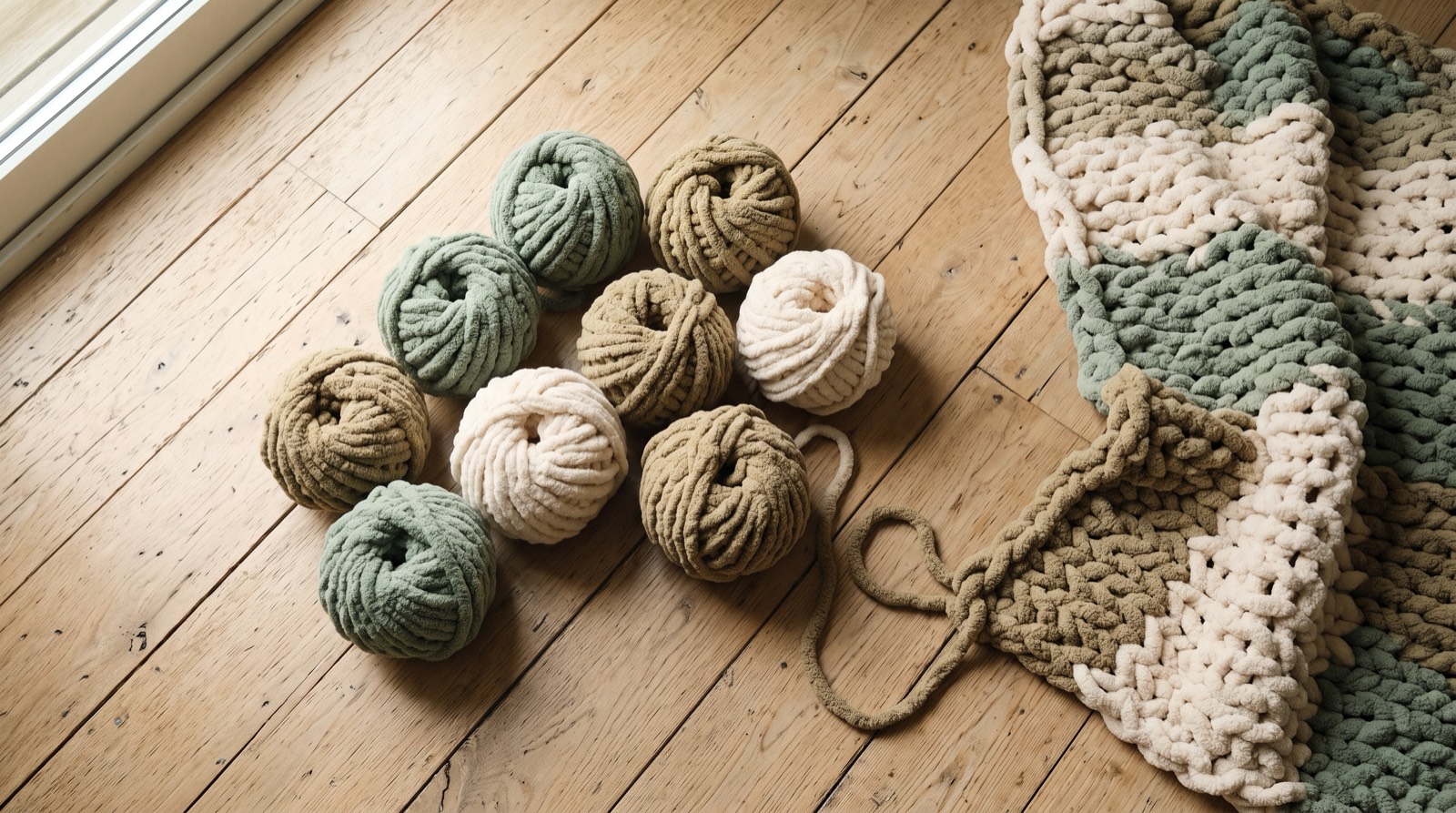
Every measurement above comes off one specific product: the Cozyful #10 chunky chenille, sold in packs of 8 skeins at 20 yds and 8 oz each, 1 inch thick, 100% polyester, certified to OEKO-TEX Standard 100. It carries 4.5 stars across 1,891 ratings, with 77% of those at five stars and 7% at two or one.
Where it is honest: the pile holds up through washing, and the strand is soft enough that people make dog crate beds out of it. Where it is not: the yardage complaints above are real and repeat across reviews, so the pack of 8 that looks like a whole blanket is closer to a lap blanket. For a 50 by 60 throw, plan on two packs.
Cozyful #10 chunky chenille, 8-skein pack
One pack covers a baby blanket with a skein to spare. Two packs cover a 50 by 60 throw. Check the colourway is in stock for the full count before you order, not after.
 See the top pick →
Working the same yarn with a hook instead of your hands gives a denser fabric and a smaller finished size from the same skein count. If that is the version you had in mind, start with our crochet blanket guide for beginners and apply the area arithmetic above to whichever stitch you land on.
FAQ
How many balls of chunky yarn does it take to make a blanket?
By area: about 212 square inches per 20 yard skein of #10 jumbo. That works out at roughly 6 skeins for a baby blanket, 10 for a lap blanket, 15 for a sofa throw and 23 for a twin bed cover. Add one spare, and order them together.
Can a chunky chenille blanket go in the washing machine?
Yes, on cold, with the water no hotter than 30 C (86 F). Tumble dry on low or dry it flat. No bleach, no iron, no dry cleaning. Buyers who have washed these blankets more than once report the pile keeping its shape.
Why did my blanket come out smaller than the pattern said?
Two likely causes. Either the pattern was written for a yarn with far more yards in the skein, or your tension is tighter than the maker’s. Check the strand thickness against the pattern’s stated yarn before blaming the count.
Do I need needles for this, or can I use my arms?
Arms work at this thickness, and that is how most of these blankets get made. The band lists US 50 (25 mm) needles as the alternative, with gauge running 2 stitches and 2 rows to 4 inches (10 cm).
Is chenille yarn a good choice for a first blanket?
For the speed, yes. For the tolerance, less so: it sheds under tension and shows every uneven loop, because the stitches are large enough to see individually. A first blanket in this yarn will teach you consistent tension whether you wanted the lesson or not.
The two-ball-size trap is the same one in Bernat chunky blanket. Keeping the fabric’s weight off your lap is also what saves a large knitted blanket from sagging mid-row. Yardage, not difficulty, is what actually sorts easy crochet projects, and the same sizing gap shows up in crochet cushion covers.
Key takeaways
- Two yarns sold as chunky blanket yarn can differ by 3.7 times in yards per ounce. Never size a project from a pattern’s yardage alone.
- Size by area covered: roughly 212 square inches per 20 yard #10 jumbo skein, measured off a finished blanket.
- Order the whole count plus a spare in one batch, before the colourway rotates.
- Measure the width every fifth row. Drift is invisible until the blanket is finished.
- Cold wash, low tumble, no iron, no dry cleaning. Heat kills the pile permanently.

The yarn behind every number in this guide
Cozyful #10 chunky chenille — the pack we measured.
See the top pick →